Coolant System Repair in Blair, Nebraska That Helps Protect Your Engine and Your Uptime
Cooling system problems rarely stay small for long. What starts as a leak, weak hose, radiator issue, or rising temperature can quickly turn into overheating, roadside downtime, and serious engine damage. STS Truck Services helps fleets and owner-operators catch coolant problems early so they do not become far more expensive failures later.
Common Cooling System Concerns We Help With
- Coolant leaks and pressure loss
- Radiator, water pump, thermostat, and hose-related problems
- Overheating concerns under load
- Cooling issues that threaten engine reliability, uptime, and repair cost
- Repairs built around preventing bigger failures
Small Coolant Problems Can Turn Into Big Engine Problems
A cooling system issue is not just a fluid issue. It is an engine protection issue. When coolant is leaking, temperatures are rising, or pressure is not being managed correctly, the cost can escalate quickly from a manageable repair into warped components, blown gaskets, or a major failure that takes the truck out of service.
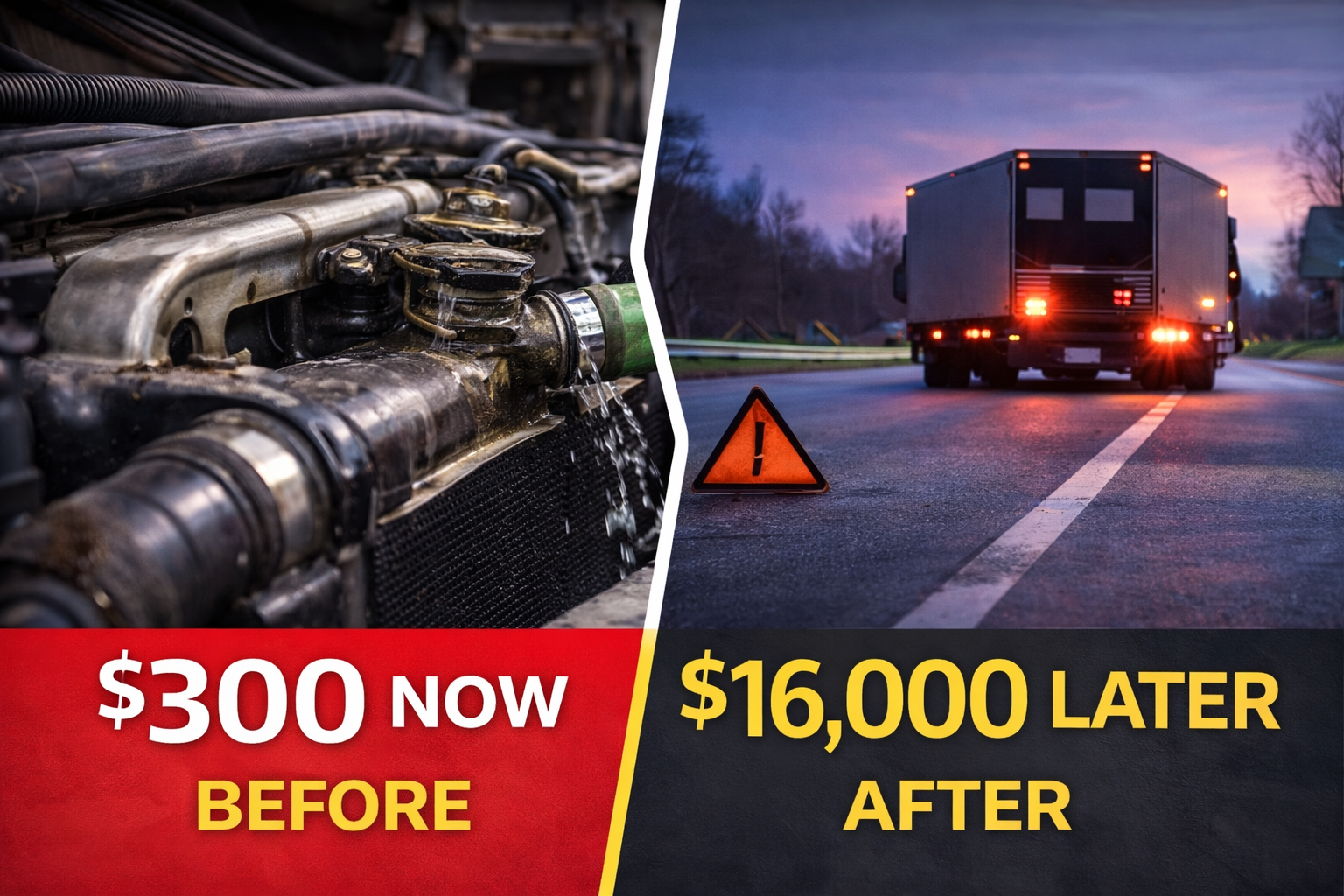
Overheating Is Usually More Expensive Than the Coolant Repair
Most customers do not lose money on the coolant repair itself. They lose money on what happens after the truck overheats — missed loads, towing, downtime, and engine damage that could have been avoided. That is why cooling system problems deserve attention before the truck is sitting on the side of the road.
What You Should Expect From Coolant System Repair
You should not have to guess whether the truck can make one more run. You should have a clear understanding of the cause, the risk, and what needs to be corrected to protect the engine and reduce the chance of bigger downtime.
Why Early Cooling System Repair Matters
A leak or temperature issue may look small at first, but waiting too long can turn a manageable repair into a major engine and downtime event.
Common Coolant System Problems
Cooling system failures can show up in several ways. These are some of the most common issues worth taking seriously.
Coolant Leaks
Small leaks are easy to dismiss, but coolant loss can turn into temperature problems quickly if the source is not identified and corrected.
Radiator Problems
A failing or damaged radiator can reduce cooling efficiency and create a bigger risk of overheating under load.
Bad Hoses or Connections
Weak hoses, clamps, and fittings can fail without much warning and create major coolant loss fast.
Overheating
When temperature starts climbing, the issue needs attention immediately before engine damage becomes part of the repair conversation.
Pressure-Related Concerns
If the system is not holding and managing pressure properly, cooling performance can suffer and bigger failures can follow.
Repeat Cooling Issues
If the same coolant concern keeps coming back, the full system needs a closer look instead of another temporary fix.
What STS Looks For During Coolant System Repair
We do not just top it off and send it back out. We want to understand the cause, the risk, and what needs to be corrected to protect the truck.
Leak Diagnosis
We identify where the system is losing coolant and what component is responsible so the repair actually solves the problem.
Cooling System Components
Radiators, hoses, clamps, and related components all matter when the goal is to stop repeat failures and protect uptime.
Engine Protection
The point of a cooling system repair is not just to stop the leak. It is to keep the engine from becoming the next expensive issue.
Common Causes of Diesel Truck Overheating
Overheating is a symptom, not the full diagnosis. The important question is why the engine cannot control temperature under real operating conditions. STS looks beyond the obvious so the same problem does not keep coming back.
Restricted or Damaged Radiators
A plugged, damaged, or restricted radiator can limit heat transfer and make the truck run hot under load, in traffic, or during heavy work.
Water Pump Problems
If coolant is not circulating correctly, the engine can overheat even when the system appears to have enough coolant.
Thermostat Failures
A thermostat that sticks, opens late, or fails to control flow properly can create temperature swings and repeat overheating complaints.
Fan Clutch or Airflow Issues
Cooling performance depends on airflow. Fan clutch concerns, blocked airflow, debris, or damaged components can cause temperature problems that show up under demand.
Low Coolant or Air Pockets
Low coolant, trapped air, or pressure concerns can prevent the system from protecting the engine the way it should.
Charge Air Cooler and Related Restrictions
Heat management is connected to more than one component. Charge air cooler, airflow, and engine load concerns can all contribute to temperature problems.
Cooling System Components We Commonly Inspect
A reliable cooling system depends on every part doing its job. When one component is weak, the entire system can struggle to protect the engine.
Radiators & Surge Tanks
We inspect radiator condition, coolant level concerns, tank condition, caps, and visible signs of pressure or leakage.
Hoses, Clamps & Connections
Soft hoses, swollen hoses, cracked hoses, weak clamps, and leaking connections can create sudden coolant loss.
Water Pumps & Thermostats
Circulation and temperature control problems can turn into overheating complaints and repeat downtime.
Fan Clutches & Airflow
Airflow problems can be easy to overlook but can cause serious cooling issues when the truck is working hard.
Coolant Condition & Pressure
Coolant condition, contamination, pressure loss, and repeat top-off needs all provide clues about the health of the system.
Related Engine Concerns
When coolant problems repeat, we consider the possibility of deeper engine, EGR cooler, pressure, or internal concerns.
Cooling System Problems Found During Preventive Maintenance
The best coolant repair is the one that gets caught before the driver is watching the temperature gauge climb. Preventive maintenance gives fleets and owner-operators a chance to find leaks, weak hoses, low coolant, and early warning signs before they turn into engine damage.
Small Leaks Before Big Downtime
Minor seepage around hoses, clamps, radiators, pumps, or fittings can often be corrected before it becomes a road call.
Temperature Complaints Before Failure
If a driver reports rising temperatures or repeat top-offs, that information matters. It gives the shop a chance to investigate before a major failure.
Fleet-Level Planning
Coolant inspections support smarter maintenance planning and connect directly with OEM maintenance plans, oil and fluid service, and fleet repair planning.
Built for Fleets and Owner-Operators
Whether you manage multiple units or one truck of your own, coolant issues can create major downtime fast. STS Truck Services helps customers move from uncertainty to a clear repair plan that protects the engine and keeps the unit working.
For Fleet Customers
We help reduce disruption and make faster repair decisions when a coolant problem threatens schedules and equipment availability.
For Owner-Operators
We help protect income by catching coolant and overheating problems before they become larger engine failures.
For Every Customer
The goal is not just to repair the leak in front of us. The goal is to help keep the truck moving with fewer preventable interruptions.
Frequently Asked Questions About Truck Cooling Systems
Coolant issues can be confusing because the symptom is often simple, but the cause can come from several different places.
How can I tell if my radiator is failing?
Watch for overheating under load, coolant loss, visible leaks, damaged fins, restricted airflow, pressure problems, or repeat temperature changes after the system is topped off.
Why is my truck losing coolant with no visible leak?
Some leaks only appear when the system is hot and under pressure. Coolant can also be lost through pressure concerns, caps, heater cores, EGR cooler issues, or internal engine problems.
What causes a diesel engine to overheat?
Common causes include low coolant, restricted radiators, failed water pumps, thermostat problems, fan clutch issues, blocked airflow, damaged hoses, air pockets, and pressure loss.
What are signs of a bad water pump?
Warning signs can include coolant leaks near the pump, overheating, bearing noise, poor coolant circulation, belt concerns, or repeat temperature problems.
Can low coolant damage a diesel engine?
Yes. Low coolant can lead to overheating, warped components, gasket failure, and major engine damage if the truck keeps operating without correction.
How often should cooling systems be inspected?
Cooling systems should be inspected during preventive maintenance and anytime there are leaks, low coolant warnings, steam, odor, rising temperatures, pressure concerns, or repeat top-off needs.
Seeing a Leak, Rising Temperature, or Signs of Overheating?
Bring the truck in before a coolant leak, radiator issue, water pump problem, or overheating concern turns into engine damage and lost uptime.
Contact STS Truck Services
Reach out for coolant leaks, radiator problems, overheating concerns, hose failures, and preventive maintenance support.
Reach the Shop
Phone: 402-533-2056
Email the Shop: stsrepair@sterlingtransportationservices.com
Address: 270 Grant Street, Blair, NE 68008
Service Area
Blair, Nebraska
Omaha, Nebraska
Fremont, Nebraska
Council Bluffs, Iowa
Missouri Valley, Iowa
I-29 and I-80 corridors