Exhaust System Repair in Blair, Nebraska That Protects Performance, Efficiency, and Uptime
Exhaust problems can affect performance, fuel efficiency, emissions behavior, and uptime. STS Truck Services helps fleets and owner-operators identify leaks, wear, and restrictions early before they become larger repair and downtime issues.
What This Page Helps Solve
- Exhaust leaks and worn piping concerns
- Power loss and fuel-efficiency complaints
- Noise, corrosion, and system wear issues
- Repair decisions built around uptime
What the Exhaust System Actually Does
Every time the engine makes power, it also produces exhaust gases filled with soot and other particulates. The exhaust system carries those gases out of the truck and away from the engine compartment and cab. Over time, exhaust components can become contaminated, worn, corroded, cracked, or damaged by age, heat, moisture, and operating conditions.
Exhaust Problems Rarely Stay Isolated
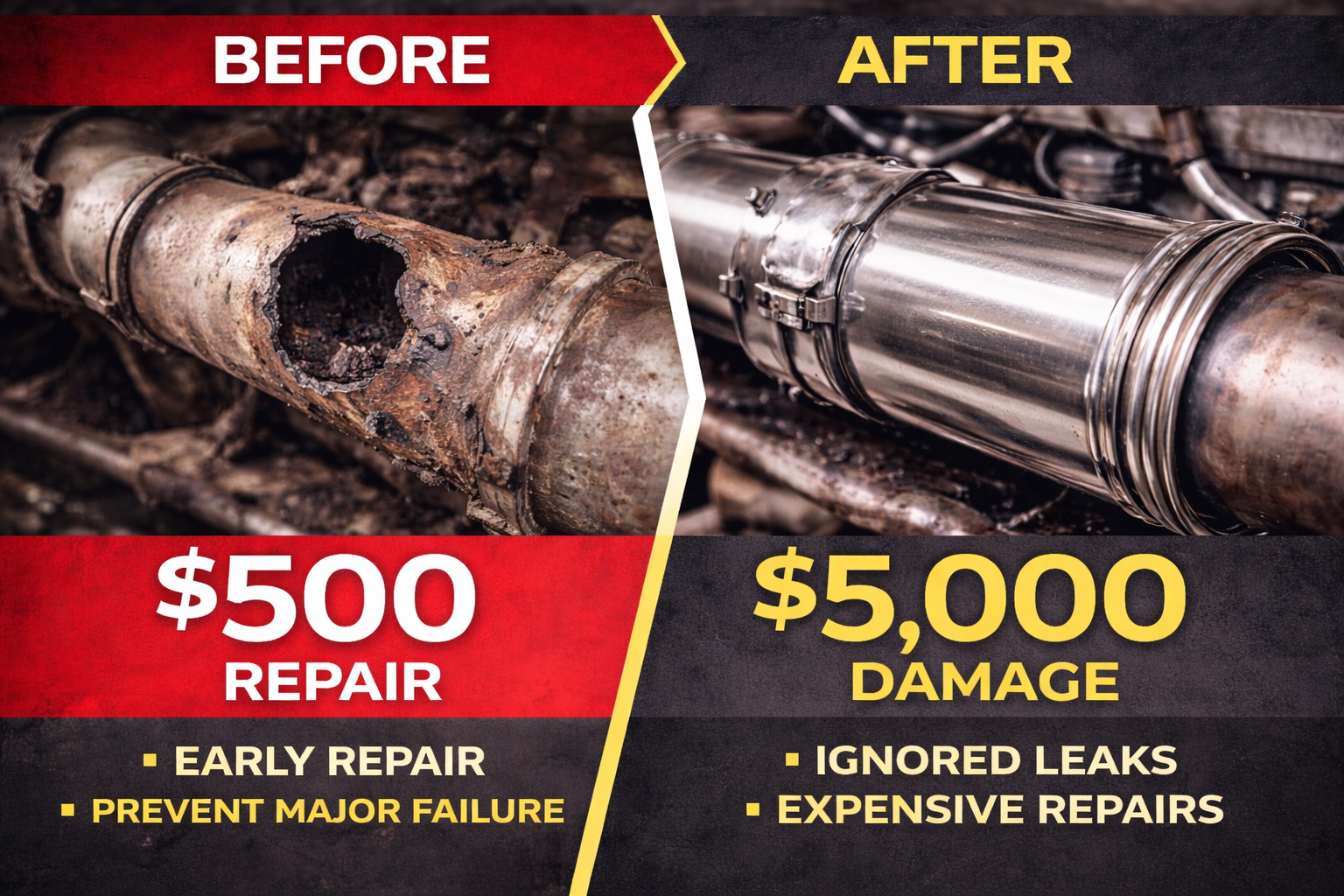
What starts as a small leak or worn pipe can turn into reduced power, increased fuel use, added noise, and extra strain on related systems. The longer it is ignored, the more likely the repair conversation gets bigger.
What Early Attention Protects
Early exhaust service helps protect performance, fuel economy, emissions behavior, and surrounding components from unnecessary wear and restriction.
Why This Matters Operationally
Exhaust issues can grow from a small leak into larger performance and downtime problems that affect schedules, confidence, and operating cost.
How To Tell If Exhaust Piping Is Wearing Out
Exhaust pipes are built to last, but they are still exposed to heat, moisture, soot, and harsh road conditions. Over time, they can wear out or fail in ways that show up through performance changes and rising operating costs.
Higher Fuel Consumption
If the engine is losing exhaust efficiency, it may need to work harder than it should, which can show up as more fuel burn than normal.
Loss of Power
Pressure problems inside the system can hurt the truck’s ability to burn fuel efficiently, which can contribute to reduced power and weaker performance.
Louder Exhaust Noise
A louder-than-normal exhaust tone can point to leaks, holes, cracks, or wear in the piping that needs attention.
Visible Wear or Damage
Rust, corrosion, thinning material, and environmental wear are all signs the piping may be getting close to replacement time.
What Causes Exhaust System Issues
Exhaust systems are constantly exposed to heat cycles, soot buildup, moisture, and road conditions. That combination can lead to contamination, restriction, corrosion, and gradual system failure if it is not addressed in time.
Carbon & Soot Build-Up
Exhaust flow can become restricted over time when contaminants build up inside the system.
Wear & Environment
Age, weather, and operating conditions slowly break down exhaust components and shorten their useful life.
Leaks & Physical Damage
Cracks, rust, loose connections, and damaged sections of piping can all affect system pressure and performance.
What STS Looks For During Exhaust Repair
We do not just patch the loud spot and send the truck back out. We inspect the system carefully, identify defects and weak points, and help determine whether the smarter move is repair, cleaning, or replacement.
Full System Inspection
We inspect the exhaust path for leaks, damage, worn sections, and related concerns that may be contributing to bigger performance issues.
Cleaning & Contaminant Removal
When buildup is part of the problem, cleaning the system helps restore better flow and supports stronger performance.
Repair or Replacement Guidance
The right decision depends on condition, durability, and what best protects uptime. The goal is to solve the issue in a way that lasts.
Exhaust Components We Commonly Inspect
Exhaust repair is not only about the loudest leak. Heat, vibration, soot, moisture, and road conditions can affect multiple parts of the system at the same time.
Pipes and Flex Sections
Cracked, worn, corroded, or damaged piping and flex sections can create leaks, noise, heat concerns, and performance complaints.
Clamps, Gaskets, and Joints
Loose connections, failed gaskets, weak clamps, and leaking joints can create soot trails and exhaust leaks that grow over time.
Hangers and Mounting Hardware
Broken or loose mounts allow movement and vibration that can stress pipes, connections, brackets, and related components.
Soot Trails and Heat Marks
Soot residue and heat signs help point to leak locations, restriction concerns, and areas that need closer inspection.
Aftertreatment Connection Points
Connections around aftertreatment components should be checked when exhaust leaks, soot, regen issues, or performance changes appear.
Corrosion and Road Damage
Rust, impact damage, road debris, and harsh operating conditions can shorten exhaust system life and create repeat repair needs.
Frequently Asked Questions About Truck Exhaust Repair
Common questions from fleets and owner-operators about exhaust leaks, soot leaks, flex pipe failure, performance concerns, and exhaust system service.
What causes diesel exhaust leaks?
Leaks can develop from corrosion, vibration, loose connections, cracked piping, failed clamps, damaged flex sections, heat cycling, and normal wear.
Can an exhaust leak affect fuel economy?
Yes. Exhaust issues can contribute to performance concerns, efficiency losses, added engine stress, and larger repair costs if ignored.
Why is my truck louder than normal?
Changes in exhaust sound often indicate leaks, damaged piping, cracks, loose connections, failed clamps, flex pipe concerns, or component deterioration.
What is a soot leak?
A soot leak is exhaust residue escaping from a leak point in the exhaust or aftertreatment path. It can point to failed joints, clamps, gaskets, cracked piping, or connection issues.
Should small exhaust leaks be repaired quickly?
Yes. Small leaks often become larger repairs and can contribute to downtime, performance complaints, heat concerns, aftertreatment issues, and additional component wear.
Can exhaust issues connect to aftertreatment concerns?
Yes. Exhaust system condition can affect how related emissions and aftertreatment components perform, especially when leaks, restrictions, or connection issues are present.
How does exhaust service support uptime?
Finding leaks, restrictions, corrosion, and worn components early helps prevent larger failures and allows repairs to be planned instead of forced by breakdowns.
What exhaust components commonly fail?
Common concerns include pipes, clamps, flex sections, hangers, brackets, gaskets, joints, mounting hardware, and areas exposed to heat, vibration, moisture, soot, and road debris.
Hearing More Noise, Seeing Wear, or Feeling a Performance Change?
Bring the truck in before a smaller exhaust issue turns into bigger fuel-cost, performance, and repair problems.
Contact STS Truck Services
Reach out for exhaust leaks, worn piping, noise concerns, fuel-efficiency complaints, and exhaust-system repair support.
Reach the Shop
Phone: 402-533-2056
Email the Shop: stsrepair@sterlingtransportationservices.com
Address: 270 Grant Street, Blair, NE 68008
Service Area
Blair, Nebraska
Omaha, Nebraska
Fremont, Nebraska
Council Bluffs, Iowa
Missouri Valley, Iowa
I-29 and I-80 corridors