Diesel Engine Repair in Blair, NE Before Power Loss Becomes Downtime
Engine problems get expensive fast when they turn into downtime, missed work, towing, and larger failures. STS Truck Services helps fleets and owner-operators near Blair, Omaha, Fremont, and Council Bluffs diagnose power loss, smoke, coolant loss, oil leaks, overheating, and major engine concerns before a smaller issue becomes a much bigger cost.
What This Page Helps Solve
- Repair vs. rebuild decision support
- Power loss, coolant loss, and smoke concerns
- Internal damage and overhaul-level problems
- Repair planning built around uptime
Diesel Engine Warning Signs That Should Not Be Ignored
Engine damage does not always announce itself all at once. Sometimes it starts with rough operation, low power, lower fuel efficiency, coolant loss, white smoke, oil leaks, overheating, or unexplained performance changes. Catching those warning signs earlier gives you more repair options and more control over cost.
The Bigger Cost Usually Shows Up After the Warning Signs Are Ignored
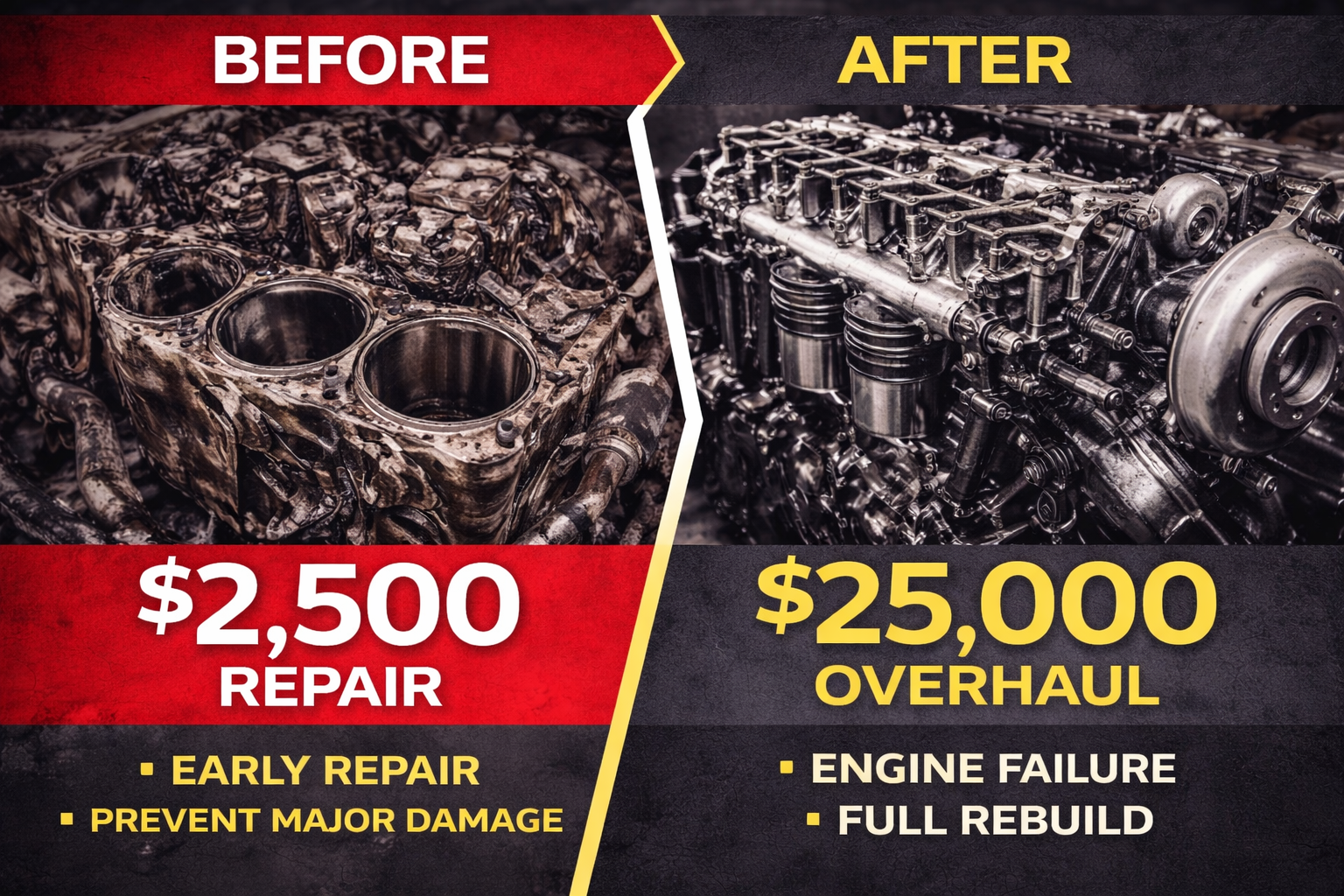
Many engine issues are manageable early. The bigger cost usually shows up later through overheating, internal wear, repeated downtime, and the added repair scope that comes from waiting too long. The sooner the real cause is identified, the more options you usually have.
Related services include diesel diagnostics, coolant system repair, EGR and DPF repair, and Cummins repair.
What Early Attention Protects
Early diagnosis protects your options. It can mean the difference between a targeted repair plan and a much larger overhaul conversation.
Why This Matters Operationally
An engine problem does not just affect the truck. It affects routes, customers, drivers, revenue, and how quickly the operation can recover.
Common Diesel Engine Problems We Help Diagnose and Repair
Jammed EGR Valve
If the EGR valve sticks open, too much exhaust gas can be recirculated back into the combustion chamber. That can reduce oxygen, lower combustion temperature, hurt fuel efficiency, and leave the truck running rough or idling unevenly.
Ruptured Head Gasket
When an engine overheats too long, the gasket between the cylinder head and block can fail. That can lead to white smoke from the exhaust, repeated coolant loss, and a constant need to keep refilling the system.
Internal Wear Reaching Overhaul Level
As engine wear gets deeper, the conversation can move beyond a single repair and into a full inspection of bearings, injectors, liners, turbo components, cylinder heads, and other major parts.
General Engine Wear
Not every worn engine needs immediate replacement. In some cases, targeted service and repair can buy more life and help protect the budget while keeping the truck working.
Engine Diagnostics Before Major Repair Decisions
A diesel engine concern should not automatically become a rebuild conversation. Power loss, smoke, coolant loss, oil leaks, overheating, and poor performance can come from several systems. STS focuses on finding the cause before deciding whether the truck needs targeted repair, deeper inspection, or overhaul-level work.
Power Loss Diagnosis
Low power can come from fuel delivery, turbocharger issues, air restriction, aftertreatment restriction, sensors, cooling problems, or internal engine wear.
Smoke and Combustion Concerns
White smoke, black smoke, rough running, and fuel-related symptoms need a process that separates injector, turbo, coolant, and compression concerns.
Coolant and Overheating Clues
Coolant loss, pressure concerns, repeated overheating, and temperature changes can point toward head gasket, cooling system, EGR cooler, or deeper engine issues.
Engine Components We Commonly Evaluate
Major engine decisions require more than one symptom. We look at the systems and components that influence engine reliability, repair cost, and whether a rebuild conversation is justified.
Turbocharger and Air System
Turbo problems, boost concerns, charge air leaks, and air restriction can create power loss, smoke, and performance complaints.
Injectors and Fuel Delivery
Injector issues, fuel pressure concerns, and delivery problems can cause rough running, smoke, poor response, and low power.
Head Gasket and Cooling Concerns
Coolant loss, white smoke, pressure changes, and overheating can require careful diagnosis before assuming the repair path.
Bearings, Liners, and Internal Wear
Internal wear, blow-by, low oil pressure, and metal debris can move the conversation toward overhaul-level inspection.
EGR, DPF, and Aftertreatment Impact
Aftertreatment restrictions and EGR-related issues can mimic engine problems or create conditions that increase engine stress.
Electrical and Sensor Inputs
Sensor faults, wiring concerns, and control issues can create symptoms that look mechanical until they are tested correctly.
Engine Rebuild and Overhaul Diagnostics
An overhaul is more than replacing one part. It involves a deeper inspection of critical engine components to determine what still meets manufacturer specifications and what no longer does.
Inspection of Major Components
Bearings, injectors, liners, turbo components, cylinder head parts, and other wear points are checked to see whether they remain within spec.
Cleaning and Tear-Down
Disassembly and cleaning help expose debris, grime, and underlying issues so the real problem areas can be found and corrected more accurately.
Reassembly and Testing
After repairs are completed and worn components are replaced, the engine is reassembled and checked to make sure performance is where it needs to be.
Engine Repair Options Before Replacement Becomes the Only Option
Not every customer is ready to replace an engine right away. When the budget is tight, the smarter move may be targeted repair work that helps extend engine life while avoiding unnecessary spending.
Life-Extension Repairs
Depending on the condition of the engine, repairs may involve fuel injectors, glow plugs, injection pumps, oil seal leaks, turbocharger-related issues, and other support work designed to keep the engine going longer.
Minor Problems Can Still Become Major
Not all engine complications start as major events. But if smaller issues are left unresolved too long, they can lead to severe engine damage and, in the worst cases, full replacement needs.
Repair vs. Replace Decisions
The right answer depends on engine condition, the truck’s role, and the customer’s budget. The goal is to understand the real issue clearly before making the next move.
Engine Conversion
Some fleets need to look beyond standard diesel operation to meet specific programs or regulatory requirements. In those cases, engine conversion may become part of the conversation.
What It Means
An engine conversion involves changing the engine from diesel to operate on an alternative fuel source such as liquefied natural gas or propane.
Why Fleets Consider It
Conversions are often considered when fleets need to meet certain compliance requirements or fit within specific operating programs.
Why It Has To Be Done Right
When properly carried out, conversion efficiency can remain competitive. But it requires the right process and the right execution to avoid trading one problem for another.
Frequently Asked Questions About Diesel Engine Repair
Engine symptoms can be serious, but the right answer depends on proving the cause before making a repair, rebuild, or replacement decision.
How do I know if my diesel engine needs an overhaul?
Signs may include major power loss, excessive blow-by, oil consumption, coolant loss, repeated overheating, low compression, bearing concerns, or repair costs that point toward a rebuild evaluation.
Is white smoke always a head gasket problem?
No. White smoke can involve coolant, injectors, fuel concerns, cold operation, turbo issues, or other engine problems. Proper diagnostics should confirm the cause.
Can power loss be caused by something other than the engine?
Yes. Power loss can come from aftertreatment restriction, turbo issues, fuel delivery, sensors, electrical faults, air system problems, cooling issues, or internal engine wear.
Should I repair, rebuild, or replace my diesel engine?
The right answer depends on engine condition, failure cause, mileage, truck use, budget, downtime risk, and whether targeted repair can reliably extend engine life.
What are signs of internal engine damage?
Watch for knocking, low oil pressure, coolant in oil, oil in coolant, excessive blow-by, metal debris, repeated overheating, major smoke, loss of compression, or severe performance changes.
Can coolant loss damage a diesel engine?
Yes. Coolant loss can cause overheating, head gasket failure, warped components, internal damage, and larger engine repair or rebuild needs.
Seeing Power Loss, Coolant Loss, White Smoke, or Signs of Engine Trouble?
Bring the truck in before a smaller engine issue turns into a larger failure, more downtime, and a much bigger repair bill.
Contact STS Truck Services
Reach out for engine damage concerns, rebuild questions, repair-vs-overhaul decisions, and major diesel repair support.
Reach the Shop
Phone: 402-533-2056
Email the Shop: stsrepair@sterlingtransportationservices.com
Address: 270 Grant Street, Blair, NE 68008
Service Area
Blair, Nebraska
Omaha, Nebraska
Fremont, Nebraska
Council Bluffs, Iowa
Missouri Valley, Iowa
I-29 and I-80 corridors