Driveline Repair in Blair, Nebraska That Helps Stop Wear Before It Turns Into Bigger Downtime
Your driveline is what turns engine and transmission power into actual movement at the wheels. When driveline parts start wearing out, the truck often tells you through vibration, noise, drivability changes, and added stress on connected parts. STS Truck Services helps fleets and owner-operators catch those issues early so they do not become bigger downtime and much bigger repair bills.
Common Driveline Problems We Help With
- Driveshaft, differential, and U-joint issues
- Vibration and drivability complaints
- Wear that creates stress on connected parts
- Repair decisions built around uptime
How the Driveline Actually Works
The driveline takes the power generated by the engine and transmission and transfers it to the wheels. It does that through a chain of components working together, including the driveshaft, differentials, drive axles, bearings, U-joints, and related parts. When one area starts wearing out, the rest of the system often begins carrying stress it was never meant to carry for long.
The Bigger Cost Usually Shows Up After the Wear Is Ignored
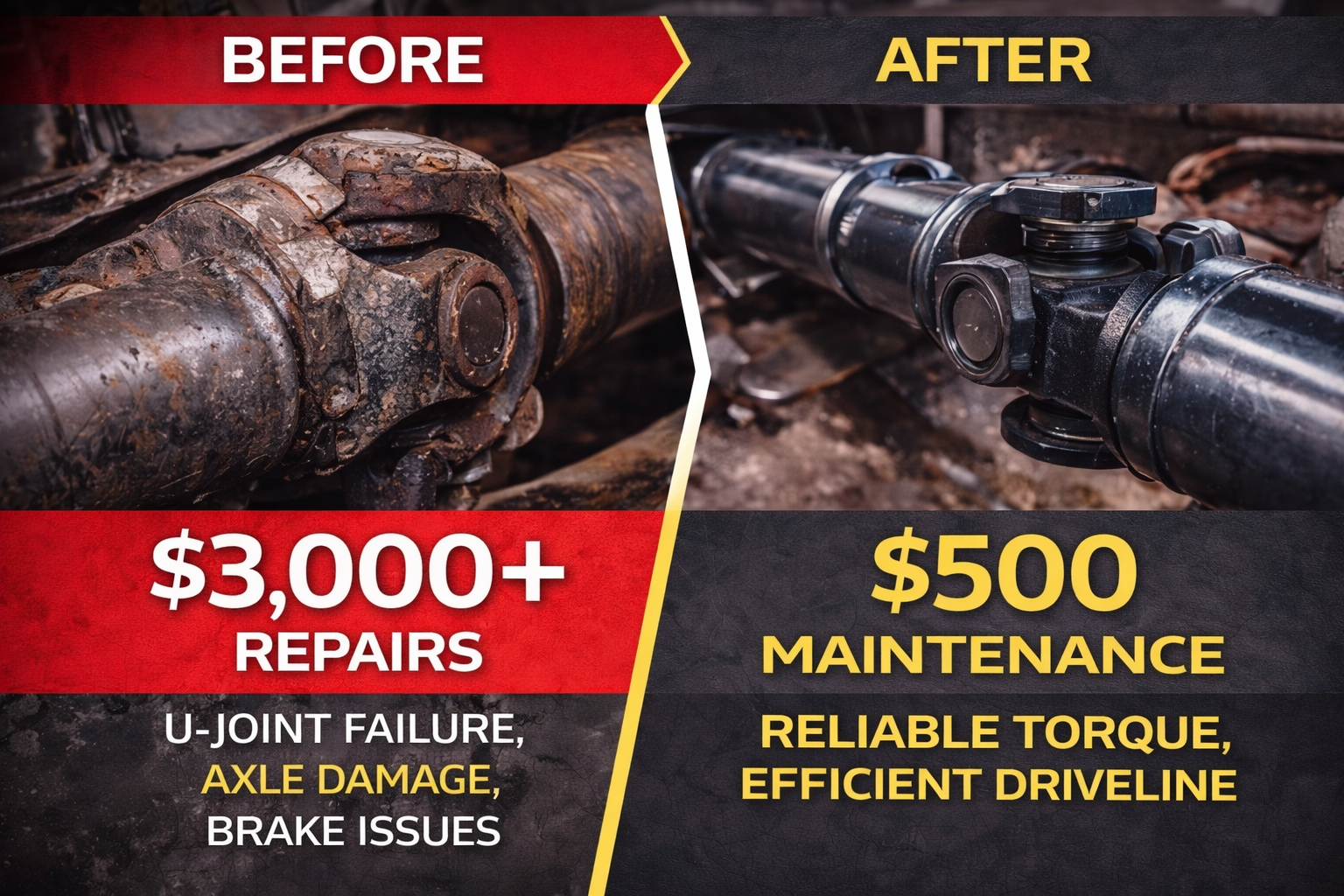
Many driveline issues are not expensive when they first begin. The bigger cost usually shows up later through vibration, U-joint failure, axle damage, brake-related complications, and the downtime that follows. Catching wear early is almost always cheaper than waiting for the truck to force the decision.
Where the Differential Comes In
The differential plays a major role in making sure power is transferred correctly when the truck is moving, especially during turns. The wheels on the outside of a turn need to travel farther than the wheels on the inside. The differential handles that difference through gears that help keep power delivery consistent instead of forcing the whole system to fight itself.
Why It Matters
If the differential is under heavy stress, low on protection, or carrying too much heat, wear accelerates and bigger driveline problems can start showing up.
Why Heat Matters
Heavy loads and hard use create heat. Heat and friction are a bad combination for driveline life when lubrication and service are neglected.
Why Service Matters
Protecting the differential with the right fluid and maintenance schedule helps the whole driveline operate more smoothly under load.
Why Service Your Driveline?
Driveline components are exposed to heavy loads every day. Differential fluid and regular inspection help reduce friction, manage heat, and protect expensive parts from premature wear. Even with normal service intervals, trucks hauling heavier loads or working in tougher conditions often need more consistent attention to stay healthy.
Fluid Protection
Clean, manufacturer-recommended fluid helps reduce friction and supports smoother operation across differential and driveline components.
Wear Prevention
Routine service helps reduce the chance of accelerated wear, metal contamination, overheating, and failure spreading to surrounding parts.
Uptime Protection
The goal is not just smooth operation today. The goal is keeping the truck out of unplanned downtime later.
Warning Signs of Driveline Wear
Driveline problems often start as small changes in how the truck feels or sounds. Catching those clues early can prevent damage from spreading into the differential, axles, driveshaft, U-joints, and connected systems.
Vibration Under Load
Vibration during acceleration, deceleration, or highway speed can point toward U-joints, driveshaft balance, carrier bearings, or differential concerns.
Clunking or Noise
Clunks, knocking, whining, grinding, or new drivetrain noises should be inspected before they become failure symptoms.
Drivability Changes
Changes in takeoff, shifting feel, power transfer, or how the truck responds under load can indicate driveline stress.
Fluid Leaks or Contamination
Differential leaks, dirty fluid, metal contamination, or heat concerns can shorten component life quickly.
Loose or Worn U-Joints
U-joint wear can create vibration, noise, and movement that stresses the driveshaft and connected components.
Repeat Wear in Connected Systems
Tire, alignment, axle, brake, or suspension concerns can sometimes be tied to driveline stress or poor operating angles.
Driveline Components We Commonly Inspect
A healthy driveline depends on every component transferring power smoothly. One worn part can create vibration, heat, stress, and repeat failures elsewhere.
Driveshafts and Yokes
We inspect for damage, looseness, balance concerns, angle issues, and wear that can create vibration or stress.
U-Joints and Carrier Bearings
Wear, looseness, lack of lubrication, or bearing failure can create noise, vibration, and driveline movement.
Differentials and Fluid Condition
Fluid level, contamination, heat, noise, and wear patterns all help determine the health of the differential.
Axles and Related Hardware
Axle stress, bearing issues, and related hardware concerns can affect power transfer and driveline reliability.
Transmission Mounts and Connected Parts
Mounts and connected systems can affect driveline angles, vibration, and component stress.
Alignment and Suspension Influence
Suspension and alignment issues can create driveline wear patterns that require a broader inspection approach.
What Our Driveline Services Cover
STS Truck Services identifies, troubleshoots, and repairs driveline issues with the goal of getting the truck back to work with dependable power transfer and fewer repeat problems.
Inspection & Diagnosis
We inspect the driveline system carefully to determine where the wear, vibration, heat, or failure is really coming from.
Fluid Service
Contaminated or worn-out fluid is replaced with manufacturer-recommended, high-quality fluid to help protect the system.
Component Repair & Maintenance
We service driveline-related components including axles, bearings, clutches, differentials, driveshafts, torque converters, transmission mounts, and U-joints.
How Poor Alignment Can Damage the Driveline
Poor alignment does not just affect tires. It can also place uneven stress on the driveshaft, U-joints, and differential. Over time, that added strain can accelerate wear and increase the chance of premature driveline failure.
Uneven Stress
When alignment is off, the driveline can be forced to work under conditions that create more load than necessary.
Premature Wear
U-joints, driveshaft components, and differential parts can all wear faster when the truck is not tracking correctly.
Smarter Prevention
Regular alignment checks are a simple way to help protect the driveline and avoid a more expensive repair later.
Frequently Asked Questions About Driveline Repair
Driveline symptoms are often felt before the failed component is obvious. These questions cover the warning signs fleet managers and drivers commonly notice first.
What causes driveline vibration?
Driveline vibration can be caused by worn U-joints, driveshaft imbalance, carrier bearing wear, damaged yokes, differential problems, alignment stress, axle issues, or loose components.
How do I know if a U-joint is failing?
Warning signs can include clunking, vibration, squeaking, looseness, drivability changes, grease loss, visible wear, or movement in the joint.
What happens if a driveshaft problem is ignored?
Ignoring driveshaft or driveline issues can lead to worsening vibration, U-joint failure, differential damage, axle stress, loss of power transfer, and costly downtime.
Can poor alignment affect driveline wear?
Yes. Poor alignment can create uneven stress on driveline components, tires, axles, U-joints, driveshafts, and differentials.
How often should differential fluid be changed?
Differential fluid intervals depend on the truck, manufacturer recommendations, load, operating conditions, and service history. Heavy use may require more frequent attention.
What are signs of differential damage?
Signs may include whining, grinding, vibration, overheating, metal contamination, fluid leaks, drivability changes, clunking, or abnormal noise under load.
Feeling Vibration, Drivability Changes, or Signs of Driveline Wear?
Bring the truck in before a smaller driveline issue turns into bigger downtime and a much bigger repair bill.
Contact STS Truck Services
Reach out for driveline vibration, differential issues, driveshaft concerns, U-joint wear, and related repair support.
Reach the Shop
Phone: 402-533-2056
Email the Shop: stsrepair@sterlingtransportationservices.com
Address: 270 Grant Street, Blair, NE 68008
Service Area
Blair, Nebraska
Omaha, Nebraska
Fremont, Nebraska
Council Bluffs, Iowa
Missouri Valley, Iowa
I-29 and I-80 corridors