Annual DOT Inspections in Blair, NE — $75 Standard Rate
STS Truck Services provides annual DOT inspection support for trucks, trailers, and other commercial units at our everyday $75 per-unit standard rate. You get clear findings, practical repair priorities, and the ability to address safety or compliance concerns before they become roadside problems.
Serving Blair, Omaha, Fremont, Council Bluffs, Missouri Valley, the I-29 corridor, the I-80 corridor, eastern Nebraska, and western Iowa with inspection clarity before the road exposes the problem.
Our standard DOT inspection price is $75 per unit, whether it is a truck, trailer, or other commercial unit. FMCSA annual inspection support and digital reporting are included so customers know what to expect before they schedule.
What’s Included in DOT Inspection Preparation
A good DOT inspection process should help you understand safety, compliance, and repair risk before a truck, trailer, or commercial unit is stopped on the road. STS publishes our $75 per-unit DOT inspection standard rate up front so there are no surprises when you schedule.
High-risk items we help review
- Brake system condition and air concerns
- Lighting, electrical, reflectors, and visibility
- Steering, suspension, tires, wheels, and hubs
- Leaks, fluids, exhaust, and visible defects
- Trailer brakes, ABS, landing gear, doors, and safety items
- Documentation and repair priorities before inspection day
Find it before DOT finds it.
The checklist page gives drivers, fleet managers, and owner-operators a practical way to prepare. STS can then inspect, document, prioritize, and repair the items that could affect uptime or compliance.
Do Not Let a Simple Inspection Turn Into a Roadside Shutdown
DOT issues usually do not feel urgent until a truck is parked, a driver is delayed, or a load is at risk. STS Truck Services helps you get ahead of those problems with inspection support that is clear, practical, and focused on keeping equipment safe, legal, and productive.
The expensive part of a DOT problem is not always the repair. It is the downtime, failed schedule, driver disruption, and lost control.
Brakes, lights, suspension, steering, tires, leaks, securement concerns, and trailer issues can all create inspection risk. Our goal is to help you understand the condition of the equipment before the road, the scale, or an enforcement stop makes the decision for you.
Inspection Findings Should Create a Plan, Not Confusion
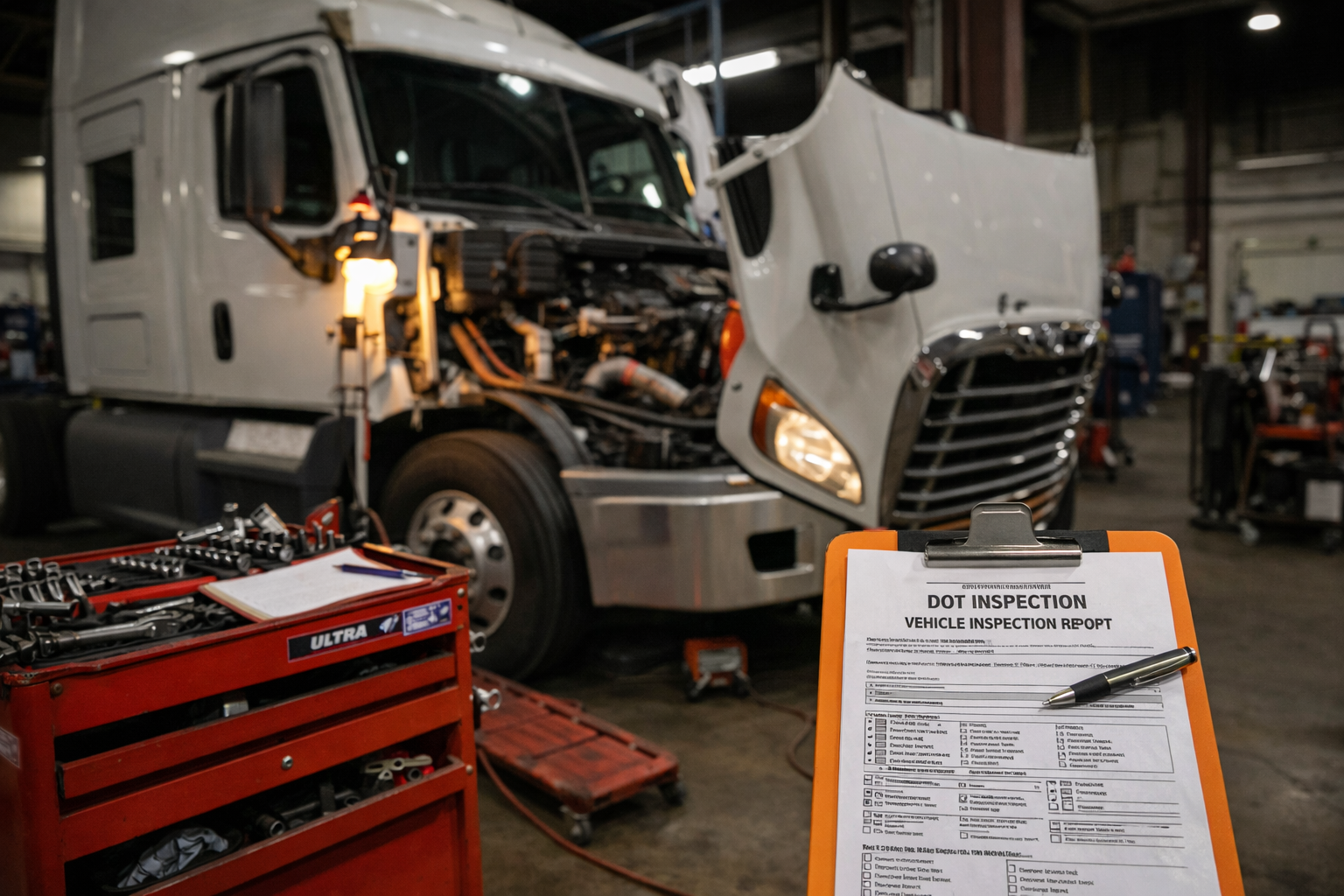
A pass, fail, or repair recommendation is only useful when the next step is clear. STS focuses on communication that helps owners, managers, and drivers understand what was found, why it matters, and how to prioritize the work.
One Inspection Protects More Than Your Truck
- Your drivers
- Your loads
- Your customer relationships
- Your schedule
- Your FMCSA compliance
- Your bottom line
A $75 annual DOT inspection helps identify issues before they become roadside violations, unexpected downtime, or expensive repairs.
What We Look For During DOT Inspection Support
Every truck and trailer tells a story. We help identify the items that can affect roadworthiness, safety, inspection readiness, and uptime.
Brake System Concerns
Brake condition, adjustment concerns, air system issues, leaks, worn components, and other safety-related items that can quickly become major compliance problems.
Lights, Electrical & Visibility
Lighting, wiring, warning indicators, reflectors, visibility items, and electrical concerns that can cause failed inspections or roadside attention.
Steering, Suspension & Undercarriage
Steering components, suspension wear, loose or damaged parts, air ride concerns, and undercarriage issues that affect safe operation.
Tires, Wheels & Hubs
Tire condition, wheel-end concerns, hub issues, tread wear, visible damage, and related problems that can threaten both compliance and uptime.
Leaks, Fluids & Visible Defects
Fluid leaks, coolant concerns, oil issues, exhaust defects, visible damage, and problems that often signal bigger maintenance needs.
Trailer Inspection Support
Trailer lights, brakes, suspension, tires, ABS concerns, doors, landing gear, and other items that can create inspection problems just as fast as a truck issue.
DOT Inspection Rules, Explained Without the Confusion
DOT inspection requirements can feel like paperwork until a truck is delayed, cited, or pulled out of service. STS Truck Services helps owners, drivers, and fleet managers understand what the annual inspection is meant to document, what each unit needs, and where repairs should be handled before the road exposes the problem.
Specific regulation references. Practical shop-level guidance.
We built this section to give customers a clearer starting point before scheduling a DOT inspection. It is not legal advice, but it does explain the common FMCSA inspection topics that affect trucks, trailers, and combination units.
Annual Periodic Inspection Requirement
Covered commercial motor vehicles generally need a periodic inspection at least once every 12 months. Combination vehicles may involve separate inspection documentation for the tractor, trailer, full trailer, or converter dolly when equipped.
Inspection Report & Recordkeeping Details
Inspection documentation should clearly identify the inspector, motor carrier, vehicle, inspection date, components inspected, and inspection result. Good records make it easier for owners, drivers, and fleets to prove what was completed.
Qualified Inspector Requirements
Annual DOT inspections are not just a quick visual walkaround. The inspector must be qualified to determine whether the vehicle meets the required inspection standards and must understand the systems being inspected.
State Inspection Program Recognition
Some state inspection programs may satisfy federal periodic inspection requirements when they meet recognized standards. For fleets operating across regions, documentation clarity matters just as much as the sticker.
Who Needs a DOT Inspection?
DOT inspection requirements are not just for semi-trucks. Many commercial trucks, trailers, and combination units may need periodic inspection documentation depending on weight, commercial use, registration, cargo, and whether the vehicle operates interstate or intrastate.
Commercial Trucks & Fleet Units
Many commercial trucks over 10,001 GVWR, regional fleet units, service trucks, box trucks, dump trucks, and tractors may fall under DOT inspection requirements depending on how they are operated.
Trailers & Combination Vehicles
Trailers, semi-trailers, dollies, and combination units may each need to be properly identified and documented. A truck may be compliant, but the trailer still matters.
Owner-Operators & Contractors
Independent operators hauling freight, equipment, materials, tools, or commercial loads may need annual inspection support based on vehicle classification and use.
Construction, Landscape & Equipment Haulers
Equipment trailers, flatbeds, enclosed trailers, utility trailers, tree service trucks, landscape trucks, and construction support vehicles can create DOT exposure when used commercially.
The roadside officer will not care that you were planning to schedule it next week.
Understanding inspection requirements before enforcement becomes involved helps reduce violations, delayed loads, driver disruption, emergency repairs, and preventable downtime.
Not sure if your unit needs a DOT inspection?
Requirements can vary by GVWR, commercial use, registration classification, trailer setup, cargo type, and interstate versus intrastate operation. Call STS Truck Services and we can help point you in the right direction before it becomes a roadside problem.
Why Waiting Until the Last Minute Costs More
The cheapest inspection strategy is not rushing a truck through at the deadline. It is finding issues early enough to make a controlled repair decision instead of reacting under pressure.
The Last-Minute Approach
- Inspection is treated like paperwork instead of risk control
- Drivers discover problems when they are already under pressure
- Repair decisions become rushed, expensive, and disruptive
- Small issues turn into downtime, delays, and bigger invoices
- Fleet leaders lose visibility into what is coming next
The STS Approach
- Inspection findings are connected to real repair priorities
- Safety and compliance concerns are communicated clearly
- Photos and documentation help support better decisions
- Repairs can be planned before the truck is forced out of service
- Maintenance becomes proactive instead of reactionary
For Owner-Operators
Your truck is your income. We help you understand what needs attention before a roadside issue costs you far more than the original repair.
For Fleets
Your inspection process should reduce surprises across the operation. We help teams prioritize units, document findings, and make better maintenance decisions.
DOT Inspection Support Backed by a Diesel Repair Shop
The inspection is only the beginning. If something needs attention, STS Truck Services can help with the repairs, diagnostics, maintenance, and follow-up work needed to keep the truck moving.
Need more than a sticker? We help you build a better maintenance rhythm.
If inspection findings keep repeating, that is usually a maintenance planning problem. STS can help you move from reactive DOT repairs to scheduled maintenance that catches patterns earlier and protects uptime.
Need a DOT Inspection Before the Road Finds the Problem?
Call STS Truck Services or request service online for DOT inspection support, checklist guidance, repair priorities, and diesel repair follow-up near Blair, Omaha, Fremont, Council Bluffs, I-29, and I-80.
DOT Inspection FAQs
Common questions from fleets, owner-operators, contractors, and commercial vehicle customers preparing trucks and trailers for annual DOT inspection requirements.
How often is a DOT annual inspection required?
Covered commercial motor vehicles generally need a periodic inspection at least once every 12 months. STS can help you review trucks, trailers, and combination units before inspection timing becomes a last-minute problem.
Does a valid annual inspection prevent roadside inspections?
No. A current annual inspection supports periodic inspection compliance, but vehicles can still be inspected roadside. The goal is to reduce obvious risk before enforcement finds it.
What documentation is required for a DOT annual inspection?
Inspection records should clearly identify the vehicle, date, inspector, carrier, components inspected, and inspection result. STS helps customers understand what was reviewed and what needs repair attention.
Can STS repair DOT inspection findings?
Yes. DOT inspection support is backed by diesel repair capability, including brakes, lights, suspension, tires, leaks, trailer concerns, diagnostics, and preventive maintenance follow-up.
Do trailers need DOT inspection support too?
Often, yes. Trailer brakes, lights, ABS, tires, suspension, doors, landing gear, and visible defects can create inspection problems just like the truck itself.
What areas does STS serve for DOT inspection support?
STS Truck Services is located in Blair, Nebraska and supports DOT inspection customers from Blair, Omaha, La Vista, Bellevue, Papillion, Elkhorn, Bennington, Fremont, Council Bluffs, Missouri Valley, Valley, Gretna, Ralston, Crescent, Glenwood, the I-29 corridor, the I-80 corridor, eastern Nebraska, and western Iowa.
Areas We Serve for DOT Inspections
STS Truck Services provides $75 annual DOT inspections for trucks, trailers, and commercial units across the Omaha metro, eastern Nebraska, and western Iowa.
Contact STS Truck Services About DOT Inspections
Reach out for annual DOT inspections, truck and trailer inspection support, checklist guidance, photo documentation, repair priorities, and diesel service built around compliance and uptime.
Reach the Shop
Phone: 402-533-2056
Email the Shop: stsrepair@sterlingtransportationservices.com
Address: 270 Grant Street, Blair, NE 68008
Service Area
Blair, Nebraska
Omaha, Nebraska
Fremont, Nebraska
Council Bluffs, Iowa
Missouri Valley, Iowa
I-29 and I-80 corridors
Eastern Nebraska and western Iowa