
Semi Truck AC Repair in Blair, NE for Hot Cabs, Weak Airflow, and Warm Air
Is your truck AC blowing warm air, cooling only while driving, failing at idle, or unable to keep the cab comfortable during Nebraska heat? STS Truck Services diagnoses and repairs heavy-duty truck air conditioning, sleeper AC, cab airflow, compressor, refrigerant leak, heat, and defrost problems for fleets and owner-operators near Blair, Omaha, Fremont, Council Bluffs, Missouri Valley, I-29, and I-80.
Fast Clues Your Truck AC Needs Attention
- Cab cools in the morning but gets hot by afternoon
- AC is cold on the highway but warm at idle
- Sleeper does not stay cool
- Blower only works on certain speeds
- Windows fog or defrost is weak
Is Your Truck AC Doing Any of These?
Drivers rarely describe the problem as “HVAC failure.” They describe what they feel in the cab. These symptoms help narrow down whether the concern may be airflow, refrigerant, compressor, electrical, blend door, condenser, fan, or heater related.
- Truck AC blowing warm air
- Semi truck AC not blowing cold
- Cab will not cool down in excessive heat
- AC cold while driving but warm at idle
- Sleeper AC not cooling
- Weak airflow from dash vents
- Blower only works on high
- AC cycles on and off constantly
- Compressor clicking, grinding, or squealing
- Driver side cold but passenger side warm
- AC works in the morning but fades later
- Cab gets hot in traffic or on job sites
- Musty smell from vents
- Water dripping inside the cab
- Windows fog or defrost is weak
- Heat does not work in cooler weather
Why Symptom-Based Diagnosis Matters
Recharging an AC system without finding the reason it stopped cooling can waste time and money. Low refrigerant, poor condenser airflow, a weak fan clutch, electrical faults, blocked airflow, blend door problems, compressor issues, and control problems can all create similar complaints from the driver’s seat. STS focuses on the cause, not just the temperature coming from the vents.
Truck AC Problems During Nebraska Heat Waves
When temperatures climb into the 90s and 100s, a weak AC system gets exposed fast. A truck that felt “good enough” in spring may not keep up once it is idling, hauling, sitting in Omaha traffic, working construction sites, pulling loads, or running long days along I-29 and I-80.
Heat Load Overwhelms Weak Systems
High outside temperatures, sun load, idling, and stop-and-go work can expose low refrigerant, dirty condenser fins, weak fans, poor airflow, and marginal compressor performance.
Driver Fatigue Becomes Real
A hot cab affects concentration, comfort, and morale. For fleets, AC is not just a luxury—it helps keep drivers productive and willing to stay in the truck.
Small Problems Become Emergency Repairs
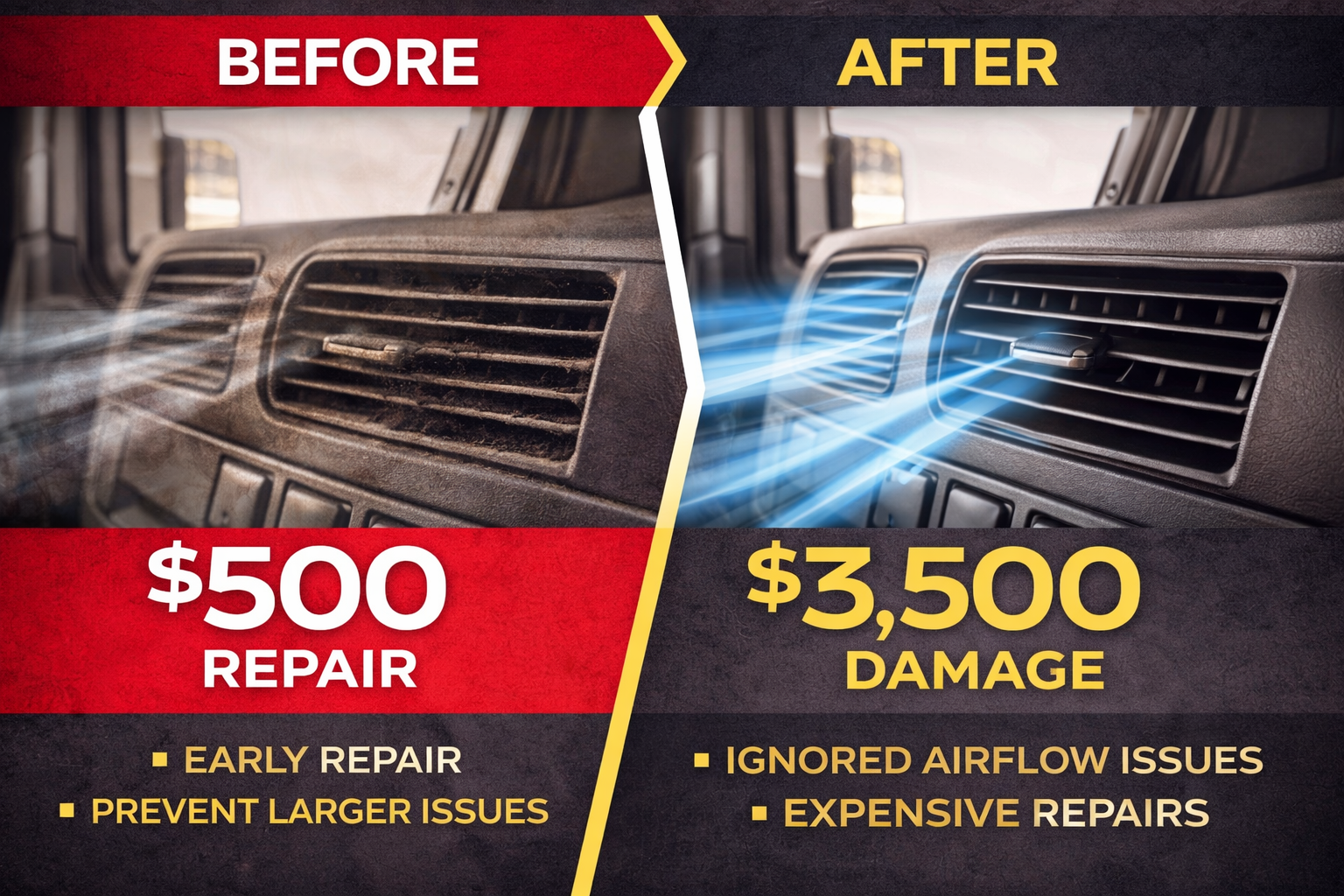
Weak cooling often gets ignored until the cab is unusable. Finding leaks, airflow issues, or pressure problems early can prevent a hotter, more expensive breakdown.
Defrost Still Matters in Summer
Humidity and temperature swings can fog windows. AC, airflow, and defrost performance work together to keep visibility safe in more than just winter weather.
Why Truck AC Is Cold While Driving but Warm at Idle
This is one of the most common heavy-duty truck AC complaints. The cab may feel acceptable on the highway, then get warm at a stop, on a job site, or while idling. That usually means the system needs more than a quick recharge.
Airflow Across the Condenser
The condenser needs strong airflow to remove heat from the refrigerant. At highway speed, road airflow can hide a weak fan, dirty condenser, restricted fins, or fan clutch issue. At idle, the problem becomes obvious because the system depends more on fan-driven airflow.
- Dirty or restricted condenser
- Weak fan clutch or fan operation
- Debris blocking airflow
- High head pressure under heat load
Pressure, Compressor, and Refrigerant Behavior
Warm-at-idle complaints can also come from compressor efficiency, refrigerant level, expansion valve behavior, pressure switches, controls, or electrical issues. The goal is to understand how the system behaves under real operating conditions—not just while parked for a few minutes.
- Compressor not keeping up
- Low or incorrect refrigerant charge
- Pressure switch or control faults
- Electrical or clutch engagement issues
Why Semi Truck AC Stops Blowing Cold
Truck air conditioning is a system. A problem in one area can feel like a completely different problem inside the cab. STS evaluates the pieces that work together to create cold air, airflow, and cab comfort.
Refrigerant Leaks
Low refrigerant can reduce cooling, but the bigger question is why it is low. Hoses, fittings, seals, condensers, evaporators, and service ports can all be possible leak points.
Compressor Problems
The compressor moves refrigerant through the system. Noise, weak cooling, clutch problems, cycling issues, or poor pressure performance can point toward compressor-related concerns.
Condenser Restriction
Bugs, dirt, debris, bent fins, and poor airflow reduce the system’s ability to reject heat. That can make cooling worse during high heat, low speed, or idle conditions.
Fan Clutch and Engine Fan Issues
On heavy-duty trucks, condenser airflow often depends on proper fan operation. A weak fan clutch can create AC complaints that only show up under heat load.
Expansion Valve or Metering Concerns
If refrigerant is not metered correctly, vent temperature and system pressure may be inconsistent. The cab may cool poorly even when some parts appear to be working.
Electrical and Control Faults
Relays, switches, wiring, pressure sensors, control heads, and modules can interrupt compressor engagement, blower operation, or temperature control.
Blower Motor and Airflow Problems
A cold evaporator does not help if air is not moving through the cab. Blower motors, resistors, filters, ducts, and debris can limit airflow.
Blend Door and Mode Door Problems
Blend and mode doors control where the air goes and how hot or cold it feels. Door, actuator, linkage, or control issues can make the system feel like it is not cooling.
Why Truck AC and HVAC Problems Should Not Be Ignored
The HVAC system controls cold air, heat, airflow, and defrost performance inside the cab. When it starts failing, the issue is not just comfort. Poor AC, weak heat, or bad defrost can affect visibility, driver focus, safety, and whether the truck is usable during hot, cold, humid, or wet conditions.
Cab Comfort Is an Uptime Issue
A truck with a hot cab may still run, but that does not mean it is truly road-ready. Drivers need a cab they can tolerate through long routes, job-site waiting, traffic delays, and summer heat. For fleets, ignored AC complaints can turn into driver downtime, rushed repairs, scheduling problems, and frustrated customers.
What Early Attention Protects
Early HVAC service helps protect driver visibility, comfort, focus, and daily truck usability before the issue becomes more disruptive.
Why This Matters Operationally
A truck that cannot cool, heat, or defrost correctly can affect safety, driver performance, scheduling, and whether the unit stays productive.
Cab AC, Sleeper AC, Airflow, Heat, and Defrost Diagnostics
HVAC complaints can look simple from the driver’s seat, but weak cooling, poor heat, low airflow, and defrost problems can come from several systems working together. STS looks at the symptom, the system behavior, and the conditions that make the problem show up.
Warm AC or Poor Cooling
Warm air can involve refrigerant leaks, compressor concerns, condenser airflow, fan clutch issues, electrical faults, controls, or airflow restrictions.
Sleeper AC Not Cooling
Sleeper comfort issues can involve system capacity, ducting, controls, airflow, evaporator performance, leaks, and the extra heat load created by summer weather.
Weak Heat
Heating problems can connect to coolant level, heater core restriction, blend door operation, airflow, thermostat performance, or controls.
Poor Defrost
Defrost problems affect visibility and safety. Weak airflow, mode doors, heat issues, AC operation, humidity, and control problems all need to be considered.
Low Cab Airflow
Restricted ducts, filters, debris, blower issues, or door problems can keep the cab from heating, cooling, or clearing windows correctly.
Intermittent HVAC Operation
HVAC problems that come and go may involve electrical faults, controls, wiring, relays, sensors, pressure behavior, or temperature-dependent component failures.
How STS Approaches Truck AC Diagnosis
We do not just chase the symptom and hope the cab feels better. We inspect the HVAC system more completely so you understand what is wrong, what else may be developing, and what repair path makes the most sense for the truck, driver, and schedule.
Listen to the Driver Complaint
When does it happen? Idle, highway speed, afternoon heat, traffic, sleeper use, rain, humidity, or only after the truck has been running?
Check Cooling and Airflow Behavior
Vent temperature, fan speeds, airflow paths, mode operation, and cab response help separate refrigerant issues from airflow or control issues.
Evaluate System Pressures and Operation
System pressure, compressor engagement, fan behavior, and condenser airflow help identify whether the AC system is performing under load.
Look for Leaks and Weak Components
Leaks, wiring concerns, worn parts, restrictions, and developing failures are reviewed so the repair plan is not just a temporary patch.
Explain What Was Found
You get a clearer repair summary so you can approve the right repair, plan around downtime, and understand what matters most.
Fleet Air Conditioning Maintenance for Summer Uptime
Fleet AC problems are easier to manage before the first heat wave fills the schedule. STS can help fleets look at HVAC concerns during preventive maintenance, seasonal inspections, and repair visits so small AC complaints do not turn into driver downtime.
AC Checks During PMs
Adding AC performance questions to PM routines helps identify weak cooling, blower problems, unusual noise, leaks, and defrost concerns earlier.
Driver Complaint Tracking
Patterns matter. If several drivers mention warm cabs, weak airflow, or AC fading at idle, the fleet may need a seasonal HVAC plan instead of one-off repairs.
Condenser and Airflow Review
Trucks working agriculture, construction, gravel, grain, dirt, or job sites can collect debris that reduces condenser and cooling performance.
Belt, Fan, and Cooling System Awareness
AC performance can connect to fan operation, belts, coolant temperature, electrical controls, and engine cooling system health.
Keep Drivers Productive
Working AC helps reduce fatigue, complaints, and route interruptions during long summer days.
Plan Repairs Before Peak Heat
Scheduling AC repairs before every driver is calling at once helps protect uptime and keeps repairs from becoming emergencies.
Truck AC Service for Heavy-Duty, Medium-Duty, Fleet, and Specialty Vehicles
STS supports a wide range of commercial trucks and work vehicles. If the cab, sleeper, heater, blower, airflow, or defrost system is affecting driver comfort or uptime, we can help diagnose the issue.
Heat Wave AC Survival Guide for Drivers and Fleets
When a truck is already struggling to stay cool, small changes in operating conditions can make the cab miserable. These checks can help you decide whether the truck needs service before it loses cooling completely.
Watch for These “About to Fail” Signs
- AC takes longer and longer to cool the cab
- Vent temperature changes with engine speed
- Cooling gets worse in traffic or at idle
- Blower speed changes by itself
- Compressor cycles rapidly or makes noise
- Driver reports heat fatigue or fogged windows
Before a Long Hot Run
- Ask the driver whether the cab cooled normally yesterday
- Check for weak airflow from vents
- Look for obvious debris in front of cooling areas
- Do not ignore AC that only works on the highway
- Schedule diagnosis before the cab becomes unusable
Frequently Asked Questions About Semi Truck AC Repair
Truck HVAC issues affect more than comfort. They can affect visibility, safety, driver focus, morale, and whether the truck stays productive in extreme weather.
Why is my truck AC blowing warm air?
Warm AC can be caused by low refrigerant, leaks, compressor concerns, condenser restrictions, fan clutch issues, electrical faults, blend door problems, or airflow restrictions.
Why is my semi truck AC cold while driving but warm at idle?
That often points to condenser airflow, fan clutch, high pressure, compressor, refrigerant, or control problems that show up more at idle than highway speed.
Why is my sleeper AC not cooling?
Sleeper AC concerns can involve airflow, ducts, controls, evaporator performance, refrigerant level, leaks, electrical issues, or excessive heat load.
Can a bad fan clutch cause poor AC?
Yes. If the fan does not pull enough air across the condenser at low speed or idle, the truck may stop cooling properly during high heat.
Should I just recharge my truck AC?
A recharge may help if the system is low, but low refrigerant usually means there is a leak or another issue that should be diagnosed.
Why does my blower only work on high?
This can be related to blower motor resistor, switch, wiring, connector, module, control head, or blower circuit problems.
Why does my truck AC smell musty?
Moisture, debris, dirty filters, evaporator contamination, or restricted airflow paths can create odors inside the cab.
Can AC problems affect safety?
Yes. Heat fatigue, poor visibility, weak defrost, fogged windows, and driver discomfort can all become safety and uptime concerns.
Do you service fleet truck AC systems?
Yes. STS supports fleet and owner-operator AC, sleeper AC, heat, airflow, and defrost concerns, including seasonal checks and PM-related inspections.
What trucks do you repair AC systems on?
STS works on heavy-duty and medium-duty platforms including Freightliner, Kenworth, Peterbilt, International, Mack, Volvo, Hino, Isuzu, box trucks, work trucks, fleet units, buses, and RVs.
Truck AC Blowing Warm Air or Struggling in the Heat?
Bring the truck in before an AC problem becomes a driver safety, cab comfort, visibility, or downtime issue.
Contact STS Truck Services
Reach out for semi truck AC repair, heavy-duty truck air conditioning diagnostics, sleeper AC concerns, heating and cooling issues, airflow complaints, and defrost-related service support.
Reach the Shop
Phone: 402-533-2056
Email the Shop: stsrepair@sterlingtransportationservices.com
Address: 270 Grant Street, Blair, NE 68008
Service Area
Blair, Nebraska
Omaha, Nebraska
Fremont, Nebraska
Council Bluffs, Iowa
Missouri Valley, Iowa
I-29 and I-80 corridors