Commercial Truck Tire Repair in Blair, NE Built to Prevent Blowouts, Uneven Wear, and Downtime
Tire problems on a semi truck, trailer, service truck, bus, or fleet vehicle rarely stay small for long. Uneven tread wear, sidewall damage, vibration, low tread depth, tread separation, and alignment-related damage can turn into safety exposure, DOT issues, road calls, and expensive replacement decisions.
STS Truck Services helps fleets and owner-operators in Blair, Omaha, Fremont, Council Bluffs, and the I-29/I-80 corridor identify tire problems early, correct the cause when possible, and keep trucks ready to work.
Tire Problems We Help Address
- Uneven tread wear, cupping, feathering, and vibration
- Steer tire, drive tire, and trailer tire concerns
- Tread separation, sidewall damage, and low tread depth
- Alignment, suspension, inflation, and wheel-end related tire damage
- DOT tire inspection concerns and safety-related findings
Why Tire Repair Matters for Heavy-Duty Trucks and Trailers
Tires are one of the most visible operating costs on a truck, but the real cost is not always the tire itself. The bigger loss often comes from downtime, roadside delays, failed inspections, damaged equipment, and repeat tire wear caused by a problem that was never corrected.
Uneven Wear Is Usually a Symptom, Not the Whole Problem
Replacing a tire without checking alignment, suspension, wheel-end condition, inflation, or operating conditions can mean paying for the same failure twice. STS looks at the tire and the truck so the repair decision protects both safety and tire life.
What Early Tire Service Protects
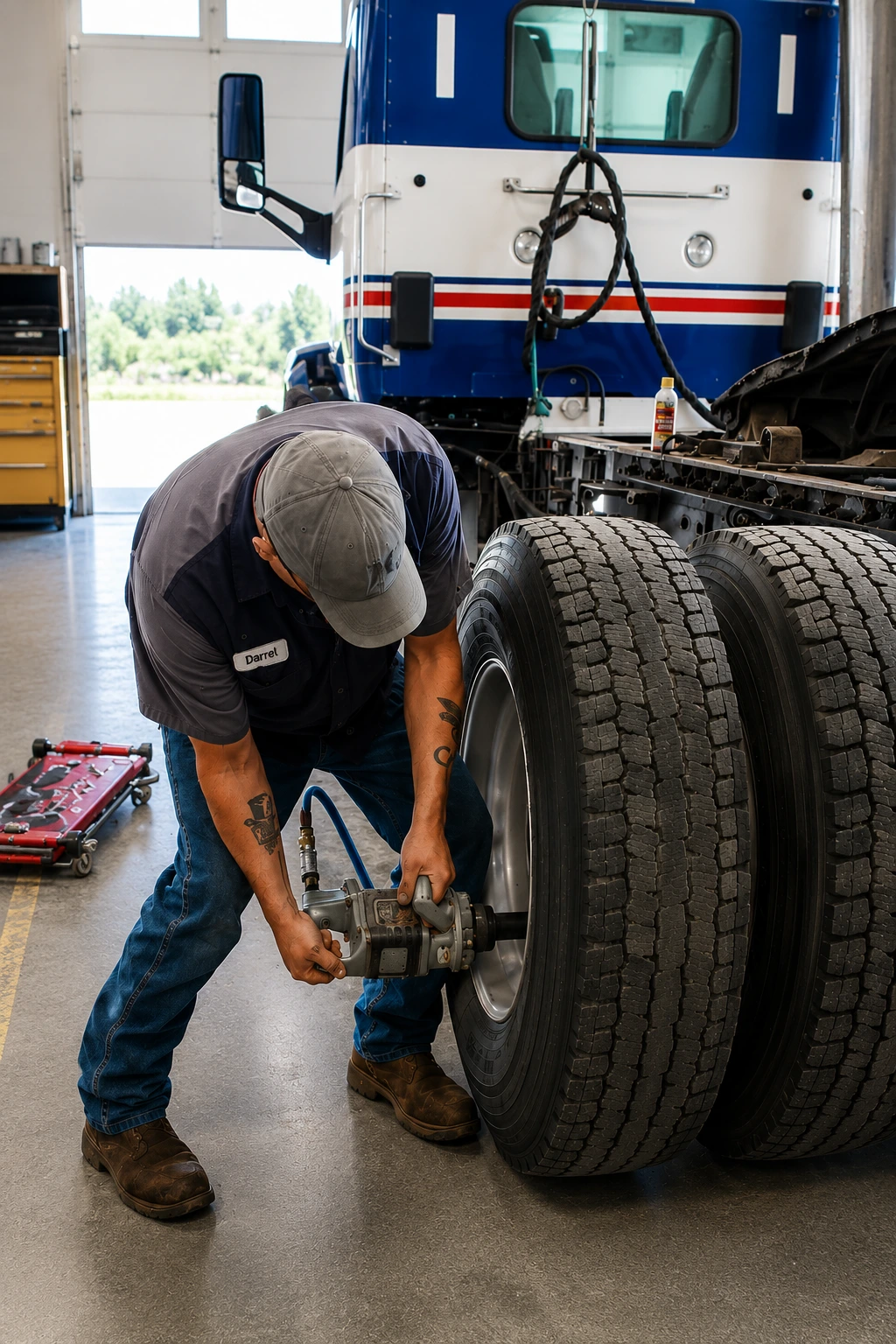
Early tire service helps protect traction, handling, braking stability, fuel efficiency, driver confidence, and the usable life of expensive commercial tires.
Why This Matters Operationally
A tire issue can become a road call, a missed delivery, a delayed job, a failed DOT inspection, or a truck sitting instead of working. Preventing that is the real win.
Common Tire Problems on Semi Trucks, Work Trucks, and Trailers
The pattern on the tire often tells a story. Uneven wear, cupping, feathering, vibration, and separation can point to problems elsewhere on the vehicle.
Uneven Tread Wear
Uneven tread wear can point to misalignment, underinflation, overinflation, worn suspension components, axle issues, or wheel-end concerns.
Cupping and Feathering
Cupping or feathered tread can be tied to shock, suspension, balance, alignment, or steering problems that should be corrected before another tire is damaged.
Tread Separation
Tread separation is a serious safety concern. It can create vibration, loss of control risk, road hazards, and emergency downtime.
Steer Tire Concerns
Steer tires affect handling, control, and driver confidence. Irregular steer tire wear should be addressed quickly because it can point to alignment or front-end issues.
Drive Tire Wear
Drive tire wear can be affected by torque, inflation, axle alignment, suspension condition, road conditions, and load patterns.
Trailer Tire Problems
Trailer tires can wear rapidly when alignment, axle, suspension, inflation, or load distribution problems are ignored.
How STS Approaches Tire Repair and Replacement
STS Truck Services handles tire repair and replacement with a focus on uptime, safety, and root-cause thinking. The goal is not just to put rubber on the road. The goal is to keep the tire problem from repeating.
Fast Tire Service
We help get trucks and trailers back into service quickly when tire damage, wear, or replacement needs are affecting your schedule.
Cost-Conscious Repair Decisions
If the tire failed because of a correctable issue, we focus on identifying that cause so you are not buying the next tire too soon.
Whole-Truck Thinking
Tire wear often connects to alignment, brakes, suspension, steering, or wheel-end condition. Smarter tire service looks beyond the tire alone.
Tire Alignment Services Help Protect Every Mile
Alignment works hand in hand with tire life. When a truck or trailer is not tracking correctly, wear accelerates, handling suffers, and the unit burns through tires faster than it should.
Why Alignment Matters
Proper alignment helps prevent premature tire replacement, improves handling, and reduces drag caused by a truck or trailer fighting its own direction.
Signs Alignment May Be Off
Steering wheel vibration, drift, abnormal wear, feathering, shoulder wear, and a truck that does not feel planted are signs alignment should be checked.
Hunter HD Alignment Capability
STS uses alignment equipment that supports light-duty, medium-duty, and heavy-duty trucks, along with trailer alignment support to help protect tire life and operating cost.
Common DOT Tire Violations We Find
Tire violations can create roadside delays, out-of-service risk, and safety exposure. Many of these issues can be found during routine inspection before they become a bigger problem.
Low Tread Depth
Tread depth issues can create compliance problems and reduce traction, especially in poor weather or heavy braking conditions.
Exposed Cord or Belt Material
Exposed cord, belt material, or severe casing damage is a serious safety concern and should be addressed immediately.
Sidewall Damage
Cuts, bulges, sidewall separation, or impact damage can make a tire unsafe even when the tread still looks usable.
Improper Tire Condition
Inflation issues, mismatched conditions, separation, and improper repairs can all create DOT, safety, and uptime concerns.
Better Tire Decisions Help Control Fleet Operating Cost
Tires are expensive, but repeat tire failure is even more expensive. A tire that wears out early because of alignment, suspension, inflation, or wheel-end problems is not just a tire expense. It is a maintenance planning problem.
Reactive Tire Replacement
Replace the tire, send the truck out, and hope the same wear pattern does not come back.
The STS Uptime Approach
Inspect the tire, look for the cause, connect related repairs, and protect the next tire before the same problem repeats.
Frequently Asked Questions About Commercial Truck Tire Repair
Answers to common questions about tire wear, replacement, alignment, and DOT tire concerns.
What causes uneven tire wear on a semi truck?
Uneven tire wear can be caused by alignment issues, underinflation, overinflation, worn suspension parts, wheel-end issues, axle concerns, load patterns, or operating conditions.
Can alignment problems ruin new truck tires?
Yes. If alignment is off, a new tire can begin wearing incorrectly right away. Checking alignment helps protect the investment in new tires.
What causes vibration after a tire issue starts?
Vibration can come from irregular wear, separation, balance concerns, damaged tires, wheel-end problems, suspension issues, or steering concerns.
When should a commercial truck tire be replaced?
A tire may need replacement because of tread depth, exposed cord, sidewall damage, separation, severe irregular wear, age, or other safety concerns.
Can suspension problems cause tire wear?
Yes. Worn shocks, bushings, springs, steering components, or axle-related concerns can contribute to abnormal tire wear.
Do trailer tires need alignment attention too?
Yes. Trailer tire wear can be caused by axle alignment, suspension condition, load distribution, inflation, or wheel-end concerns.
Seeing Uneven Wear, Tire Shake, Low Tread, or Signs of Separation?
Bring the truck or trailer in before a tire issue turns into a safety problem, DOT concern, premature replacement expense, or unexpected downtime.
Contact STS Truck Services
Reach out for commercial truck tire repair, semi truck tire replacement, trailer tire service, alignment-related wear issues, DOT tire concerns, and fleet tire support in Blair, Omaha, Fremont, Council Bluffs, and the I-29/I-80 corridor.
Reach the Shop
Phone: 402-533-2056
Email the Shop: stsrepair@sterlingtransportationservices.com
Address: 270 Grant Street, Blair, NE 68008
Service Area
Blair, Nebraska
Omaha, Nebraska
Fremont, Nebraska
Council Bluffs, Iowa
Missouri Valley, Iowa
I-29 and I-80 corridors