Suspension Repair in Blair, Nebraska Before Rough Ride Turns Into Tire Wear, Handling Problems, and Downtime
Suspension issues do more than make a truck uncomfortable. They affect handling, tire life, alignment stability, load control, and safety. STS Truck Services helps fleets and owner-operators catch suspension problems early so one worn component does not turn into multiple repair costs.
What This Page Helps You Avoid
- Ride quality and handling complaints that keep getting worse
- Uneven tire wear and alignment stress from worn components
- Air ride and leaf spring problems that affect control under load
- Reactive repairs that turn one issue into multiple costs
Suspension Problems Rarely Stay in the Suspension
Suspension is easy to overlook until the truck starts riding rough, wearing tires unevenly, drifting, or feeling unstable. But the suspension system plays a major role in carrying weight, absorbing road impact, protecting alignment, and helping the unit stay controlled under load.
One Worn Component Can Create Several Expensive Problems
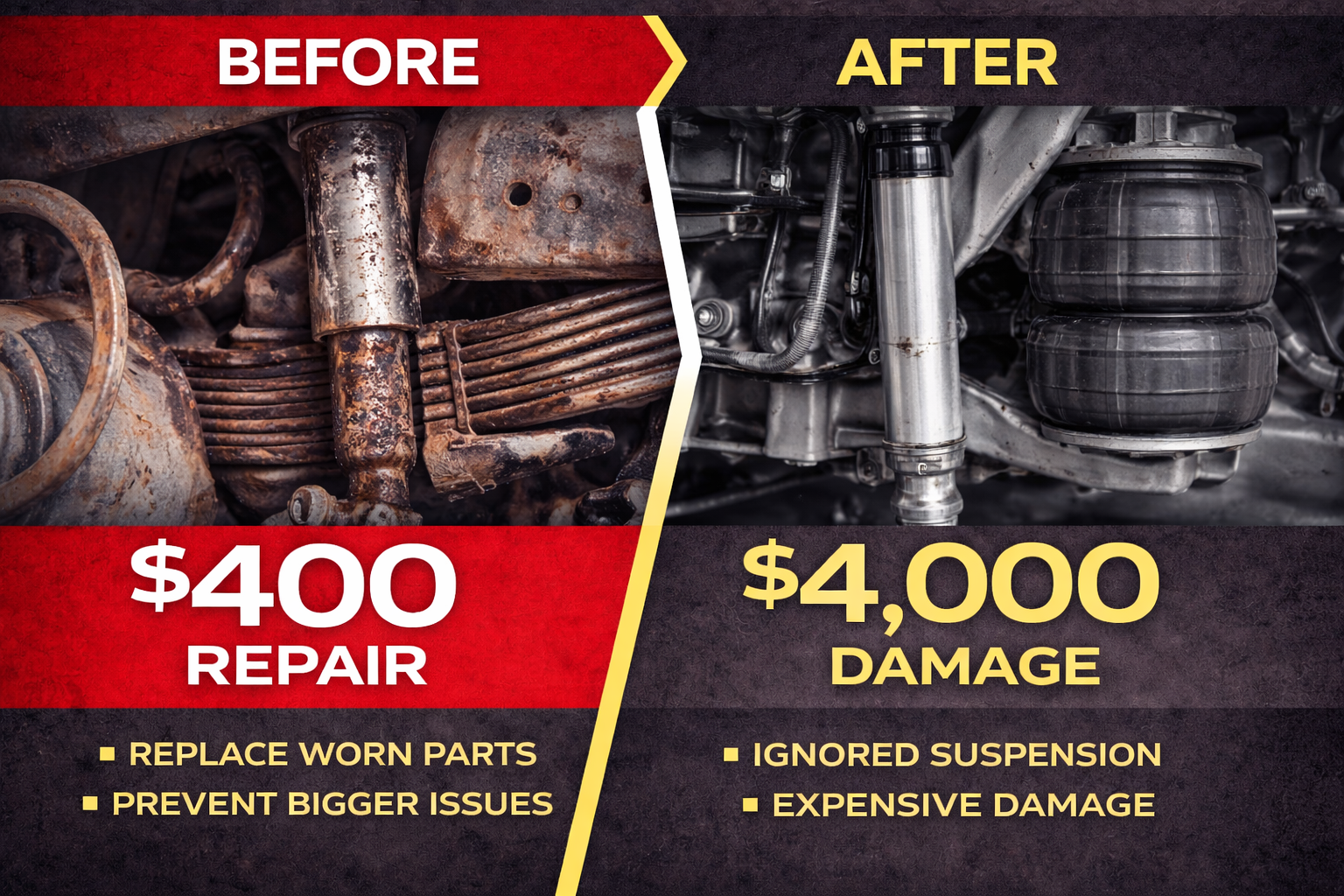
What starts as a worn suspension component can spread into uneven tire wear, alignment problems, rough handling, and extra stress on connected systems. The longer it is ignored, the more likely you are to pay for the issue in several places instead of one.
What Early Repair Protects
Early suspension service helps protect tire life, alignment stability, ride quality, control, and how the truck performs under load before damage spreads into other systems.
Why This Matters Operationally
A suspension issue that gets ignored often becomes a tire cost, a handling problem, and a downtime issue all at once. When tire wear or handling changes are already showing up, our alignment services can help identify related concerns. Fixing it early protects both the truck and the schedule.
Watch an Actual Suspension Bushing Replacement
Professional hydraulic equipment helps our technicians remove and install heavy-duty suspension bushings safely and accurately. This is an actual repair performed at STS Truck Services in Blair, Nebraska.
“They provided great solutions and suggestions and did so in a fair and reasonable manner financially. I am thankful I found them and would entrust them with repairs.”— Dan Pollema, 5-Star Google Review
Why Fleets Choose STS for Suspension Repair
Suspension work affects tire life, handling, alignment, driver comfort, and uptime. STS combines experienced technicians, professional tooling, clear communication, and fleet-focused repair planning so customers know what was found, what matters now, and what can be watched over time.
The Big Two: Air and Leaf Suspension
Most heavy-duty trucks and trailers rely on one of two main suspension types: leaf spring suspension or air suspension. Knowing which system is under the truck helps explain why the right maintenance matters and why ignored wear becomes expensive fast.
Leaf Spring Suspension
Leaf spring systems are common and built to handle serious weight. Over time, wear, fatigue, and road abuse can reduce ride quality, stability, and how well the truck stays controlled under load.
Air Ride Suspension
Air suspension offers a smoother ride, but it depends on air bags, hoses, and related components that can leak, weaken, or fail and quickly reduce ride quality and system effectiveness.
Combination Systems
Some trucks use both air and leaf spring components together. These setups can perform well, but they also create more pieces that need regular inspection before one weak point affects the rest of the system.
Suspension Components We Commonly Inspect
Suspension repair is not just one part. Ride control, tire wear, alignment stability, and load handling depend on multiple components working together.
Air Bags and Air Lines
Leaking air bags, weak lines, fittings, and height-control issues can create uneven ride height, rough ride, and load-control problems.
Leaf Springs and Mounting Hardware
Cracked leaves, sagging springs, worn shackles, and damaged mounting points can affect stability and how the truck carries weight.
Shocks and Ride Control
Weak shocks can increase bounce, reduce control, contribute to tire wear, and make the truck harder to manage under load.
Bushings and Torque Rods
Worn bushings and torque rods can allow unwanted axle movement, poor tracking, vibration, and uneven tire wear.
Hangers, Brackets, and U-Bolts
Loose, damaged, or worn hardware can create noise, movement, handling concerns, and additional component stress.
Alignment and Tire Wear Clues
Suspension wear often shows up in tires first. Uneven wear patterns can point toward deeper suspension or alignment concerns.
Warning Signs of Truck Suspension Problems
A truck usually gives clues before a suspension issue becomes expensive. Those clues matter because they can protect tires, alignment, control, and uptime.
Uneven Tire Wear
Feathering, cupping, shoulder wear, and irregular tread patterns can be signs that suspension or alignment issues are affecting tire life.
Rough Ride or Excessive Bounce
Changes in ride quality can point to weak shocks, worn suspension parts, air ride problems, or load-control issues.
Truck Pulling or Poor Tracking
If the truck wanders, pulls, or feels unstable, worn suspension parts may be affecting control and alignment stability.
Air Loss or Uneven Ride Height
Air ride systems should maintain height. Slow air loss, leaning, or low ride height can point to leaks or component failure.
Clunks, Bangs, or Vibration
Noises and vibration can be signs of looseness, worn bushings, damaged hardware, or components moving more than they should.
Load Control Concerns
If the truck does not feel stable under load, suspension wear should be inspected before the problem spreads.
What STS Does During Suspension Service
When a truck comes in with a suspension complaint, the goal is not just to replace one part and move on. We look at the system more completely so you understand what is worn, what else may be affected, and what repair path gives the truck the best chance to stay stable, predictable, and productive.
Comprehensive Inspection
We assess the suspension system carefully to identify worn, damaged, or weakened components that may be affecting ride control, alignment stability, and how the truck handles under load.
Clear Repair Process
We walk you through what was found and what needs to happen next so there is no guessing about what is driving the complaint or what is going into the repair.
Quality Parts and Equipment
Reliable suspension repair depends on quality components, proper tools, and work built for the way heavy-duty trucks are actually used every day.
Frequently Asked Questions About Truck Suspension Repair
Suspension issues often show up as tire wear, ride complaints, air loss, or handling changes before the root cause is obvious.
What causes uneven tire wear on a heavy-duty truck?
Uneven tire wear can come from worn suspension components, alignment concerns, air ride problems, loose bushings, shocks, steering issues, inflation problems, or axle and load-related concerns.
How do I know if an air bag suspension is leaking?
Warning signs include the truck sitting low, slow air loss, uneven ride height, compressor cycling, hissing sounds, rough ride, or the suspension failing to maintain height under load.
Can suspension problems affect alignment?
Yes. Worn suspension parts can change ride height, axle position, tire contact, and handling, which can create alignment stress and uneven tire wear.
When should leaf springs be replaced?
Leaf springs should be inspected when there are cracks, sagging, broken leaves, shifting, poor ride quality, handling changes, load-control concerns, or visible wear in related mounts and hardware.
What are signs of worn bushings or torque rods?
Signs can include clunking, axle movement, poor tracking, tire wear, vibration, handling changes, or visible cracking and looseness in bushings and related components.
Why repair suspension problems early?
Early repair can protect tire life, alignment stability, ride control, driver comfort, load handling, and uptime before one worn component creates several connected repair costs.
Feeling a Rough Ride, Handling Change, or Uneven Tire Wear?
Bring the truck in before a smaller suspension issue turns into bigger tire, alignment, handling, and control problems that cost more to fix.
Contact STS Truck Services
Reach out for suspension wear, air ride issues, leaf spring concerns, rough ride complaints, and truck handling problems before the issue spreads into bigger tire and alignment cost.
Reach the Shop
Phone: 402-533-2056
Email the Shop: stsrepair@sterlingtransportationservices.com
Address: 270 Grant Street, Blair, NE 68008
Service Area
Blair, Nebraska
Omaha, Nebraska
Fremont, Nebraska
Council Bluffs, Iowa
Missouri Valley, Iowa
I-29 and I-80 corridors