
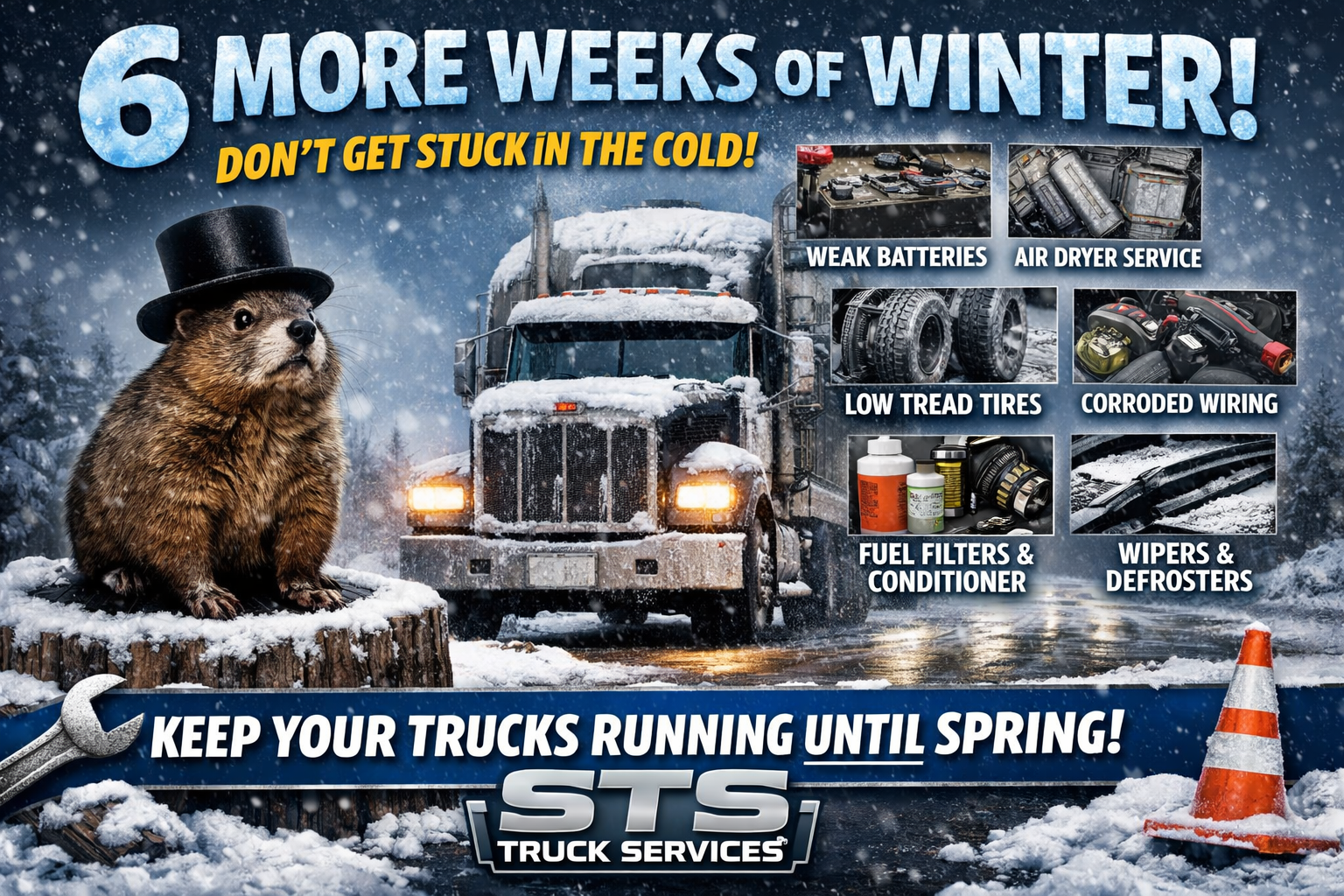
Whether you believe Punxsutawney Phil or not, late winter is still hard on trucks. Cold temperatures, moisture, road salt, and constant freeze-thaw cycles keep stressing electrical systems, air systems, fuel delivery, tires, HVAC components, and underbody hardware. If your equipment already has weak spots, this stretch of winter is often where they finally show up as real problems. The original STS Companies post highlights these same late-winter risk areas and frames them as largely preventable with the right maintenance approach.
Winter does not have to win the last six weeks.
If your truck is already showing warning signs, now is the time to deal with them before another cold snap turns a minor issue into lost time and a bigger repair bill.
Cold weather electrical and battery problems
Cold weather reduces battery capacity and makes weak electrical connections more obvious. The STS Companies post specifically calls out weak batteries, corroded terminals and grounds, starter and alternator strain from repeated cold starts, and lighting failures caused by moisture and salt intrusion.
- Weak or failing batteries
- Corroded terminals and ground connections
- Starter and alternator strain from repeated cold starts
- Lighting failures tied to moisture and salt exposure
If you are already seeing slower cranking, dim lights, repeated jump starts, or intermittent electrical complaints, waiting for warmer weather is usually the wrong move. Late winter often pushes marginal components over the edge. For related support, visit diagnostics and electrical repair.
Air dryer and brake system maintenance
Moisture in the air system is one of winter’s biggest troublemakers. The source post notes that without proper air dryer maintenance, trucks can experience frozen air lines, slow brake response, ABS faults, and costly roadside breakdowns. It also recommends servicing air dryers, replacing cartridges, and inspecting air systems to protect braking performance and safety.
- Frozen air lines
- Slow brake response
- ABS faults
- Roadside downtime tied to frozen moisture in the system
This is exactly the kind of issue that feels small until the truck is sidelined. If your air system has been slow, inconsistent, or showing winter-related faults, it is worth checking now instead of hoping it makes it to spring.
Fuel system protection in late winter
Late winter is still prime time for fuel-related issues. The STS Companies article points to plugged fuel filters, gelling diesel fuel, poor engine performance, and hard-start or no-start conditions as common cold-weather problems. It also recommends the correct fuel conditioners and timely fuel-filter replacement to protect injectors and pumps during extended cold weather.
- Plugged fuel filters
- Fuel gelling
- Poor performance
- Hard starts or no-starts
If your truck has already been acting sluggish in the cold, that is not something to shrug off. Fuel flow issues can get more expensive quickly. For service support, explore general diesel service and diagnostics.
Tires, tread depth, and air pressure
The source article also highlights falling tire pressure from temperature swings, low tread depth, uneven wear patterns, and increased blowout risk as key late-winter tire concerns. It recommends routine tire inspections and pressure checks to improve safety, fuel economy, and tire life.
- Low tire pressure caused by temperature changes
- Reduced traction from low tread depth
- Uneven wear patterns
- Higher risk of tire failure
If winter has been rough on your tires, now is the time to catch it. Visit tire repair and alignments if you are seeing wear or drivability concerns.
Visibility, defrost, and HVAC complaints
Good visibility is not optional. The STS Companies post points to worn wiper blades, defrosters that do not clear the windshield properly, HVAC systems struggling to keep the cab warm, and blower motors or actuators failing late in winter. It emphasizes that HVAC and defrost service help keep drivers comfortable, alert, and safer during icy mornings and snowy evenings.
- Weak defrost performance
- Cab heat complaints
- Worn wiper blades
- Blower motor or actuator problems
If your truck is not keeping the windshield clear or the cab warm, that is both a comfort issue and a safety issue. See HVAC repair in Blair, Nebraska for support.
Salt, slush, and underbody damage
Winter road treatments are brutal on trucks. The original post specifically identifies corroded electrical connections, damaged lighting circuits, rusted brackets and fasteners, and torn or missing mud flaps as common salt-and-slush-related issues. It also notes that catching corrosion early helps prevent electrical failures and keeps equipment looking professional and compliant.
This matters because winter damage rarely stays cosmetic. Corrosion and moisture can start creating electrical and hardware issues that keep getting worse long after the snow is gone.
Why late-winter preventive maintenance matters
The source article says it well: waiting for spring often means waiting for a breakdown. It lists the benefits of preventive maintenance now as reduced emergency repairs, less unexpected downtime, improved safety and reliability, lower long-term cost, and better compliance through winter’s final stretch.
That is exactly how we would frame it on the STS site too. The smartest late-winter move is not hoping the truck survives until spring. It is finding the weak spots now while you still control the timing.
Keep your truck ready until spring actually gets here
If your truck is dealing with weak batteries, air system issues, fuel problems, tire concerns, visibility complaints, or corrosion-related trouble, now is the time to act. STS Truck Services supports owner-operators and fleets with shop repairs, diagnostics, maintenance, and mobile service built around keeping equipment moving. The original STS Companies article also notes that STS provides both shop repairs and mobile service to help equipment keep moving through tough winter conditions.