Why Suspension Bushings Matter on Heavy-Duty Trucks
When bushings are doing their job, most drivers never think about them. They help absorb road shock, control suspension movement, maintain proper alignment, and reduce metal-to-metal contact between critical suspension components.
But when bushings crack, dry rot, crush, loosen, or disintegrate, the truck may still keep rolling — until the problem gets expensive.
At STS Truck Services in Blair, Nebraska, we help fleets, owner-operators, and commercial vehicle owners inspect, identify, prioritize, and repair worn suspension bushings before small problems turn into major suspension damage, unsafe handling, failed inspections, tire wear, or downtime.
We recently added a new heavy-duty bushing tool to better support suspension pin and bushing repairs. That means our team is better equipped to handle tough bushing jobs and help customers keep their trucks operating safely, reliably, and efficiently.
A heavy-duty truck suspension works under extreme stress. Every mile, the suspension absorbs road shock, manages weight transfer, controls axle movement, and helps keep the tires planted correctly on the road.
Suspension bushings are designed to cushion and control movement between metal components. They are commonly found in areas such as leaf spring eyes, suspension arms, torque rods, shackles, equalizers, hangers, cab and chassis mounting points, and trailer suspension components.
When the rubber or composite material inside the bushing is intact, the suspension can move as designed. When that material breaks down, the suspension may shift, bind, clunk, wander, or create metal-on-metal contact.
That Is Not Just a Comfort Issue
Worn bushings can affect safety, steering control, braking stability, tire life, alignment, and long-term suspension cost.
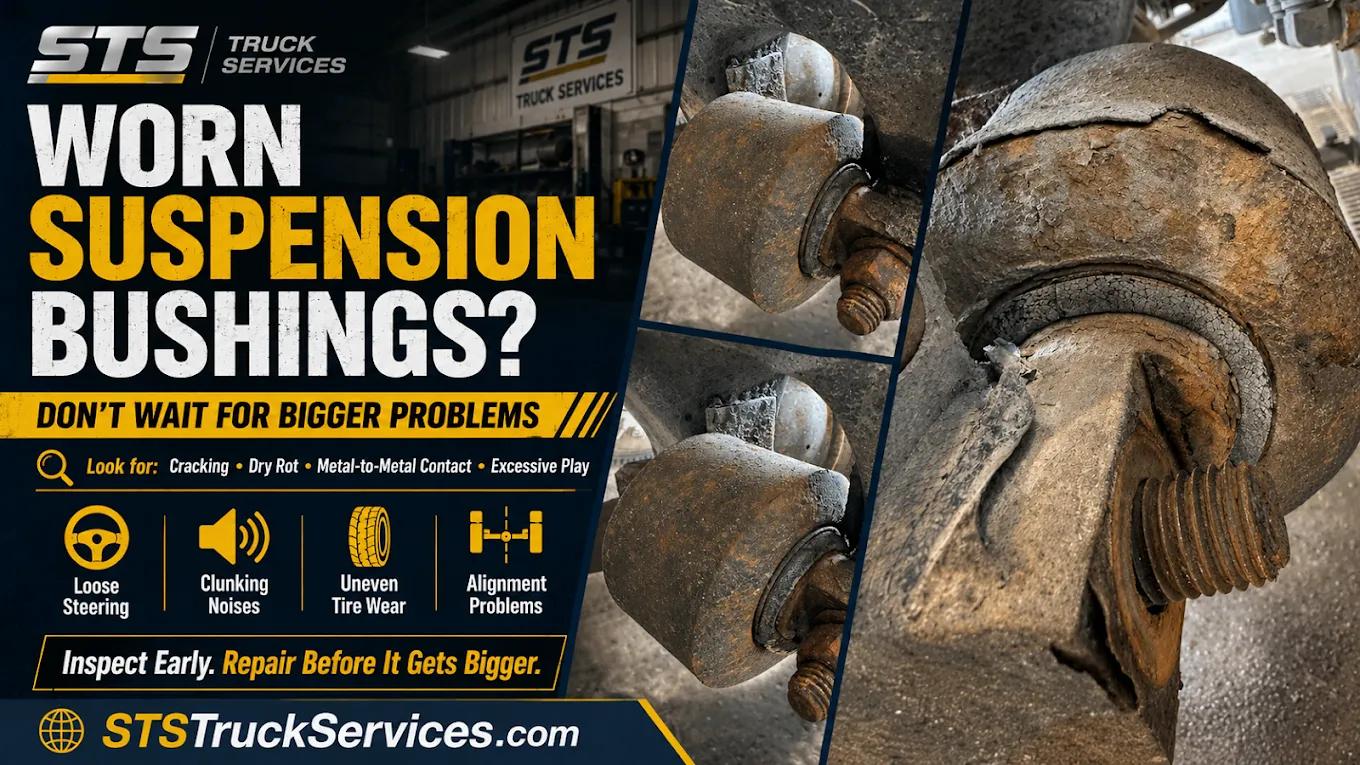
Signs Your Truck Suspension Bushings May Need Replaced
Worn bushings often show warning signs before they completely fail. The problem is that those signs are easy to miss if the person doing the inspection is inexperienced, rushed, or not trained to identify heavy-duty suspension wear.
Visible Cracking or Dry Rot
Rubber bushings can crack, split, and dry rot over time. Age, road salt, weather exposure, heavy loads, vibration, and normal use can all contribute to bushing deterioration.
Crumbling or Disintegrating Rubber
A bushing that is falling apart is no longer doing its job. If pieces of rubber are missing, flaking, or crumbling away, the suspension is losing the cushion and control the bushing was designed to provide.
Metal-on-Metal Contact
When the bushing is crushed, missing, or deteriorated, the pin, sleeve, spring eye, hanger, or housing may begin contacting metal-to-metal. That can cause accelerated wear, noise, loose movement, and damage to parts that cost much more than the bushing itself.
Excessive Play or Slop
Suspension components should move as designed, not shift loosely or clunk around. Loose movement may indicate worn bushings, worn pins, damaged brackets, or related suspension concerns.
Loose Steering or Wandering
If a truck feels loose, wanders across the lane, pulls during braking or acceleration, or feels unstable, worn suspension bushings may be part of the problem.
Clunking, Banging, or Creaking Noises
Worn bushings often create noise over rough roads, during turns, during braking, or when accelerating. Clunks and bangs are warning signs that something is moving more than it should.
Uneven or Rapid Tire Wear
Bad bushings can allow suspension movement that changes alignment angles and tire contact patterns. That can lead to uneven tire wear, rapid tire wear, cupping, feathering, or irregular tread wear.
Worn Bushings Can Cost More Than the Bushing
The bushing itself may be one component, but the damage caused by ignoring it can spread through the entire suspension system.
- Premature tire wear
- Alignment problems
- Loose handling
- Clunking and driver complaints
- Suspension component damage
- Worn pins or brackets
- Failed DOT inspections
- Increased downtime
- More expensive repairs later
By the time a bushing is completely gone, the truck may need more than a bushing replacement. It may need pins, hardware, brackets, suspension parts, alignment correction, tire replacement, or additional labor due to seized and rusted components.
We Often Find Problems That Others Miss
At STS Truck Services, we often see trucks where maintenance has been performed somewhere else, but the real suspension issue was missed.
The truck may have had an oil change. It may have been greased. It may have had a quick walk-around inspection. The invoice may have said “PM complete.” But the bushings were cracked, the suspension had excessive play, the rubber was deteriorating, and the tires were starting to wear unevenly.
This is a common issue when inexperienced or untrained employees are asked to perform maintenance inspections without knowing what heavy-duty truck problems look like in the real world.
A PM is only as valuable as the inspection behind it. At STS Truck Services, our technicians know what to look for. We are not just checking boxes. We are looking for signs of wear, damage, safety risk, downtime risk, and future repair cost.
Why Professional Heavy-Duty Suspension Inspections Matter
Heavy-duty truck suspension systems are built to work hard, but they still need trained eyes during maintenance inspections. A professional suspension inspection can help identify cracked bushings, dry-rotted rubber, failed pins and sleeves, metal-on-metal contact, loose or worn hardware, excessive suspension movement, broken or worn spring components, torque rod wear, alignment-related tire wear, air ride suspension issues, shock and mounting concerns, hanger and bracket damage, and related wheel-end or brake concerns.
A trained technician can connect the dots between a worn bushing, a tire wear pattern, a driver complaint, a handling issue, or a future alignment problem. That is where experience matters.
Our New Heavy-Duty Bushing Tool Helps Us Serve Customers Better
Suspension bushing jobs can be difficult, especially on heavy-duty trucks exposed to road salt, rust, heavy loads, and years of service. These components are often pressed in, seized, corroded, or difficult to remove without the right tools.
STS Truck Services recently invested in a new heavy-duty bushing tool to help with pin and bushing removal and installation. This helps our shop perform these repairs more professionally and efficiently.
The right tool can help improve repair quality, reduce unnecessary damage to surrounding components, support proper removal and installation, help with tough seized bushing jobs, improve shop efficiency, reduce downtime for customers, and expand our suspension repair capability.
What We Look for During PM and Suspension Inspections
When STS Truck Services inspects truck suspension bushings, we are looking for more than just “is the bushing still there?” We look at the condition of the system as a whole.
- Bushing condition: cracking, dry rot, separation, missing material, crushed bushings, and signs that the bushing is no longer centered.
- Pin and hardware wear: worn pins or sleeves that may keep a new bushing from solving the problem.
- Metal-to-metal contact: shiny wear marks, rust patterns, shifting components, or contact points.
- Excessive movement: loose suspension movement that may indicate bushing, bracket, pin, or component failure.
- Tire wear patterns: irregular wear that may point toward alignment, suspension, inflation, or component problems.
- Driver complaints: wandering, clunking, pulling, bouncing, rough ride, or unusual movement.
- Related components: shocks, springs, hangers, torque rods, brakes, wheel ends, alignment, and tires.
We Help Customers Plan, Prioritize, and Budget Repairs
Not every issue found during an inspection requires the same response. Some problems need immediate attention. Others should be planned. Some should be monitored and documented.
STS Truck Services helps customers organize inspection findings into practical categories: repair now, plan soon, monitor, and completed. That helps customers understand what was found, what matters most, and what can be planned before it turns into downtime.
Preventive Maintenance Is About More Than Oil Changes
A strong preventive maintenance program is not just oil, filters, and grease. Those services are important, but they are only part of the picture.
A real preventive maintenance program should help protect the whole truck, including suspension, steering, brakes, tires, wheel ends, driveline, cooling system, electrical and lighting, aftertreatment and emissions, trailer components, and DOT safety items.
The Cost of Waiting Too Long
A worn bushing may seem like something that can wait. But waiting too long can create a chain reaction. A cracked bushing can become a failed bushing. A failed bushing can become metal-on-metal contact. Metal-on-metal contact can damage pins and brackets. Loose suspension movement can affect alignment. Poor alignment can destroy tires. Eventually, the truck may be down when you need it most.
The best time to fix a suspension issue is before it becomes a breakdown.
Heavy-Duty Truck Suspension Repair in Blair, Nebraska
STS Truck Services provides heavy-duty truck suspension inspection and repair for fleets and owner-operators in Blair, Nebraska, and the surrounding region, including Omaha, Fremont, Missouri Valley, Council Bluffs, Washington County, eastern Nebraska, western Iowa, and the I-29, I-80, Highway 30, Highway 75, Highway 91, and Highway 275 corridors.
If your truck operates in the Blair or Omaha area and you are seeing suspension wear, uneven tire wear, clunking noises, loose handling, or inspection concerns, STS Truck Services can help.
Trust STS Truck Services for Suspension Bushing Inspections and Repairs
Our team can help with heavy-duty truck suspension inspections, leaf spring bushing replacement, suspension pin and bushing repairs, torque rod and suspension component inspections, trailer suspension concerns, steering and suspension diagnostics, tire wear inspections, alignment-related concerns, preventive maintenance inspections, DOT inspection preparation, and fleet maintenance planning.
We do not want customers to find out about a worn bushing after the truck is already down. We want to help identify small issues early, explain what we found, and help you make a plan.