Heavy-Duty Wheel-End Problems Are Safety Problems
At STS Truck Services in Blair, Nebraska, we inspect, diagnose, and repair heavy-duty truck and trailer wheel ends for fleets, owner-operators, agricultural haulers, livestock trailers, hopper trailers, flatbeds, vans, tankers, vocational trucks, and commercial equipment traveling through Blair, Omaha, Fremont, and the surrounding area.
Our focus is simple: safety, reliability, and efficiency. When it comes to wheel ends, those three words matter.
What Is a Wheel End?
The wheel end is the assembly that allows the wheel and hub to rotate safely on the axle spindle. On a heavy-duty truck or trailer, the wheel end includes several critical components: hub, bearings, races or bearing cups, wheel seal, hub cap, lubricant or oil, spindle, brake drum, brake shoes, brake hardware, wheel studs, and fasteners.
When all of these parts are clean, lubricated, adjusted, and installed correctly, the wheel end can operate safely for thousands of miles. When one part fails or is installed incorrectly, the entire assembly can be at risk.
A Leaking Wheel Seal Is a Warning Sign
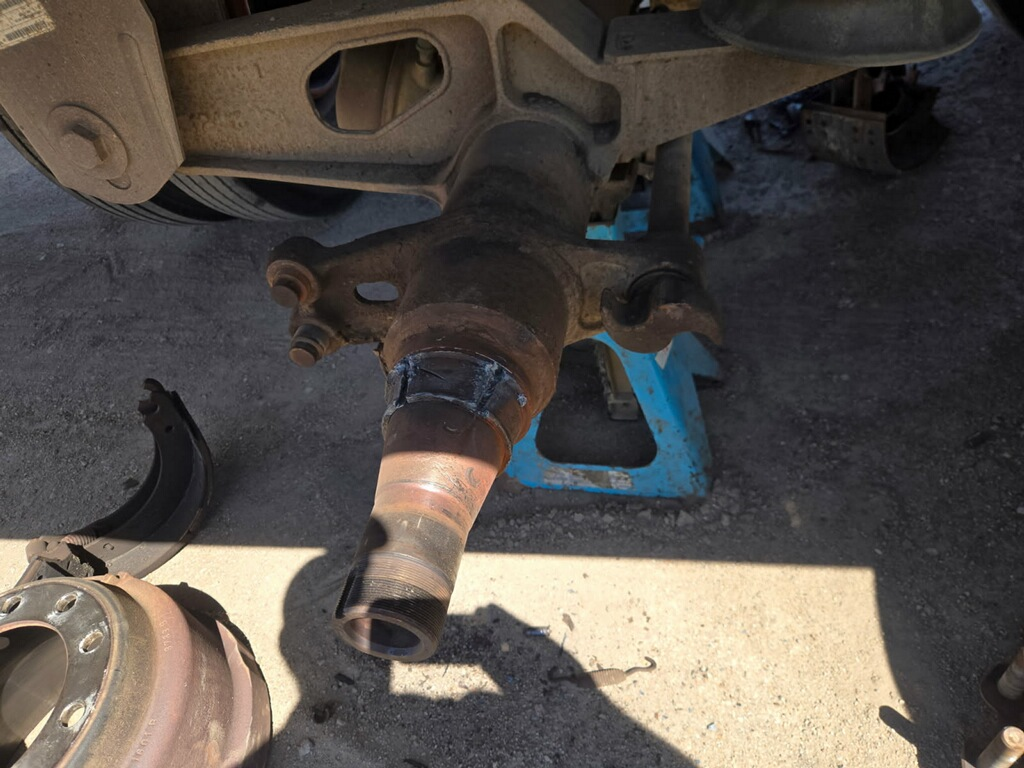
One of the most common wheel-end problems we see at STS Truck Services is a leaking wheel seal. A wheel seal is designed to keep lubricant inside the hub and away from the brake system. Once that seal starts leaking, oil can escape from the hub and contaminate the brake shoes, drum, tire, wheel, and inner wheel area.
That leak is not just messy. It is a safety warning.
- Low hub oil
- Bearing damage
- Oil-soaked brakes
- Reduced braking performance
- Heat buildup
- Hub damage
- Spindle wear
- Roadside failure
- Wheel-off risk
If a driver or fleet manager sees oil around the hub, wheel, tire, or brake area, the equipment should be inspected before it becomes a much larger repair.
Oil-Soaked Brakes Don’t Stop Like They Should
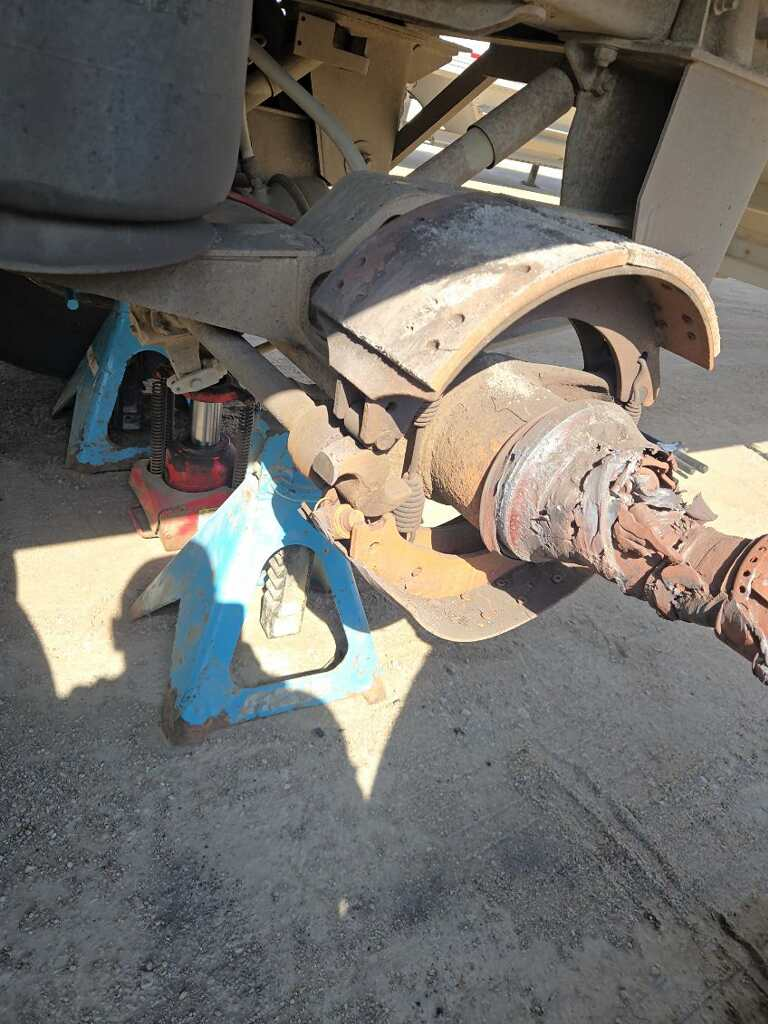
When hub oil leaks onto the brake shoes or drum, the brake system can no longer perform the way it was designed. Oil-contaminated brakes may not stop properly, especially when the truck or trailer is loaded. This can become a serious safety issue during hard braking, downhill grades, traffic situations, or emergency stops.
Once brake shoes are soaked with oil, the repair often becomes more than a wheel seal replacement. The job may require brake shoe replacement, brake drum inspection or replacement, brake hardware replacement, hub cleaning and inspection, bearing inspection or replacement, seal replacement, spindle inspection, and proper hub installation and adjustment.
Burned Bearings Can Destroy the Hub, Spindle, and Wheel End
Wheel bearings need proper lubrication and proper adjustment. When the hub runs low on oil, or when bearings are installed too tight or too loose, the bearings can overheat. Overheated bearings can fail quickly.
When bearings burn up, they can damage the hub, spindle, bearing cups, seal surface, brake drum, wheel assembly, nearby brake components, tires, and wheels. In severe cases, bearing failure can lead to fire or wheel separation.
Incorrect Wheel-End Installation Can Cause Repeat Failures
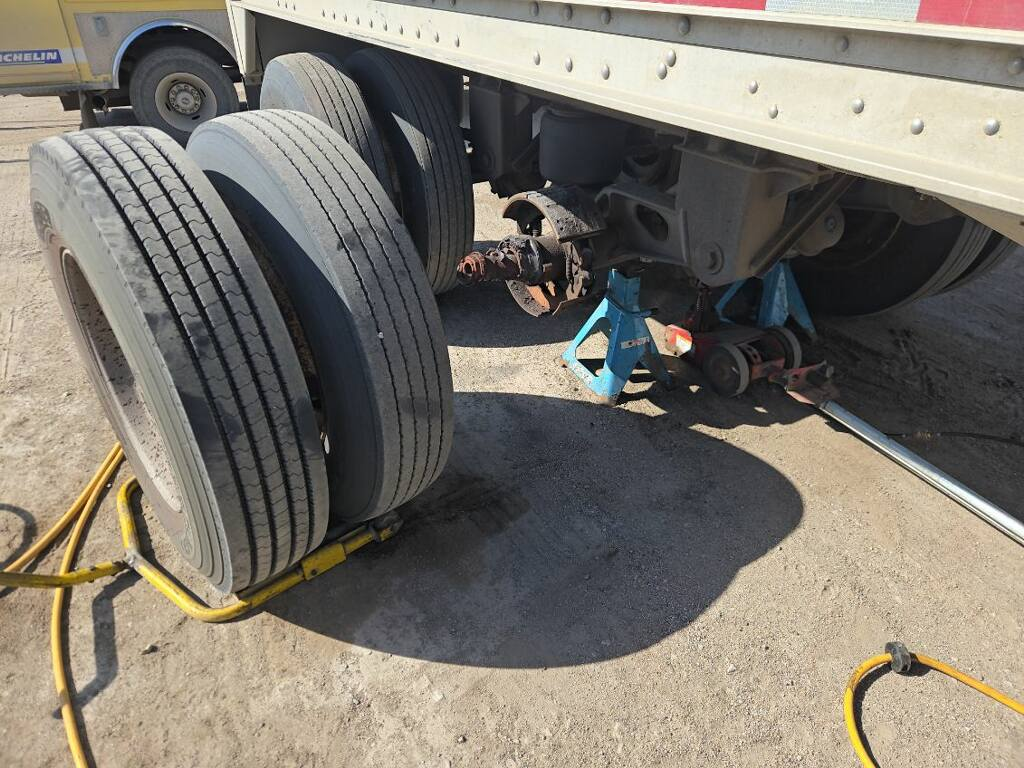
Not every wheel-end failure is caused by age or mileage. Many failures are caused by improper installation. Common installation problems include the wrong wheel seal, incorrect bearing parts, damaged or reused components, dirty installation, improper bearing preload, a hub installed too tight or too loose, failure to inspect the spindle, failure to check hub oil after repair, failure to replace oil-contaminated brakes, and ignoring damaged hub caps or sight glasses.
At STS Truck Services, we focus on the full repair process: correct parts, proper inspection, proper torque, proper adjustment, and a clean professional installation.
Spindle Inspection Is Critical
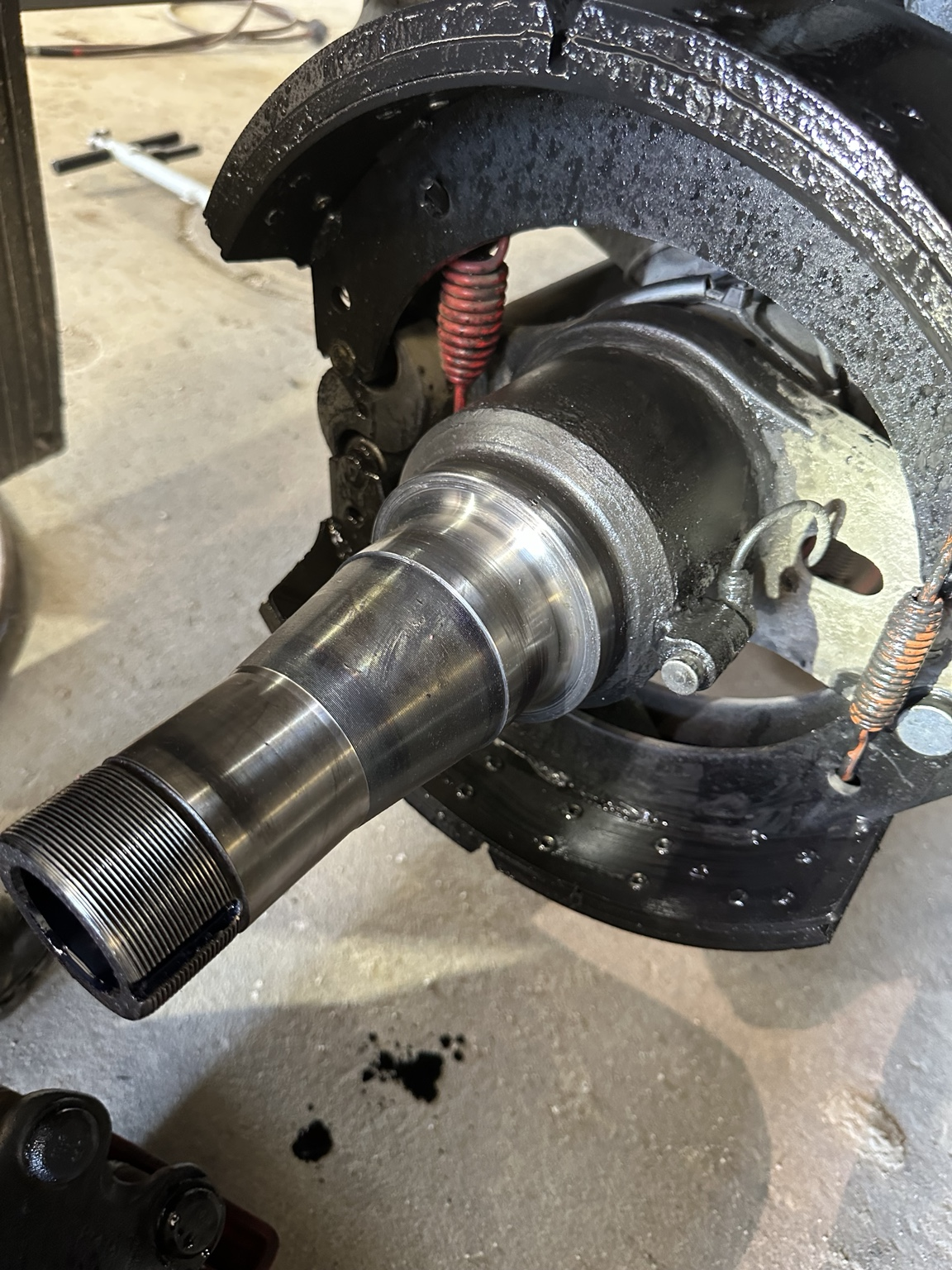
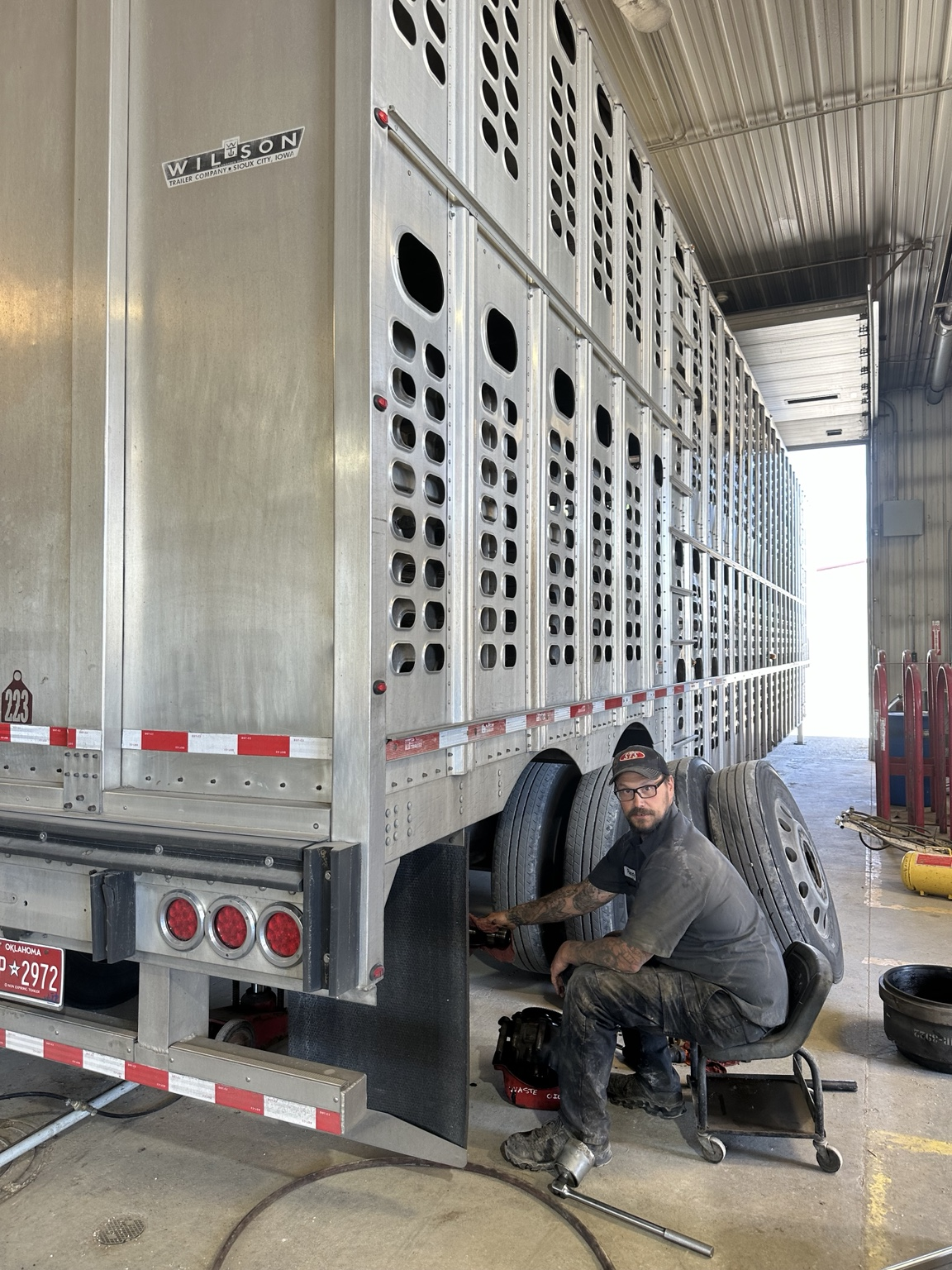
The spindle is one of the most important parts of the wheel-end assembly. If the spindle is worn, scored, grooved, overheated, or damaged, simply replacing the seal may not solve the problem.
A damaged spindle can cause repeat seal leaks, bearing failure, improper hub fit, excessive heat, wheel-end looseness, and unsafe operation. During wheel-end service, the spindle should be carefully inspected for wear condition, seal surface damage, heat discoloration, thread damage, and bearing fit.
Drivers Should Be Checking Hub Oil During Pre-Trip Inspections
A strong driver pre-trip inspection can prevent a major wheel-end failure. Drivers should look for oil on the inside of the wheel, oil streaks on tires or wheels, oil on brake components, low hub oil level, empty hub cap, cloudy or contaminated hub oil, cracked hub cap, loose or missing hub cap plug, hot wheel-end smell, smoke near the wheel area, abnormal wheel-end noise, braking changes, and pulling during braking.
If a driver sees oil around the hub or brake area, that unit should be inspected right away. A driver catching a leaking seal early can save the fleet from a major repair, roadside breakdown, missed load, or safety event.
Wheel-End Problems Rarely Get Better on Their Own
Leaking wheel seals, hot hubs, smoking wheel ends, grinding noises, low hub oil, brake pull, reduced braking performance, visible spindle wear, or repeated wheel seal failures should all be taken seriously.
Preventive Wheel-End Maintenance Saves Money
Preventive maintenance is almost always cheaper than emergency wheel-end repair. A leaking seal caught early may be a manageable shop repair. A failed bearing on the road can turn into towing, downtime, spindle damage, hub damage, brake damage, tire damage, missed delivery windows, and a much larger repair bill.
Professional wheel-end maintenance helps protect drivers, equipment, cargo, delivery schedules, CSA performance, customer commitments, fleet uptime, repair budgets, and company reputation. Wheel-end service is not just maintenance. It is risk management.
Heavy-Duty Truck and Trailer Wheel-End Repair in Blair, Nebraska
STS Truck Services provides heavy-duty truck and trailer repair for customers in and around Blair, Nebraska, including fleets operating near Omaha, Fremont, Tekamah, Missouri Valley, Council Bluffs, and surrounding freight corridors.
We service many types of commercial equipment, including semi-trailers, hopper trailers, livestock trailers, dry vans, flatbeds, drop decks, tank trailers, belt trailers, walking floor trailers, end dumps, vocational trucks, and Class 7 and Class 8 trucks.
What STS Truck Services Checks During Wheel-End Service
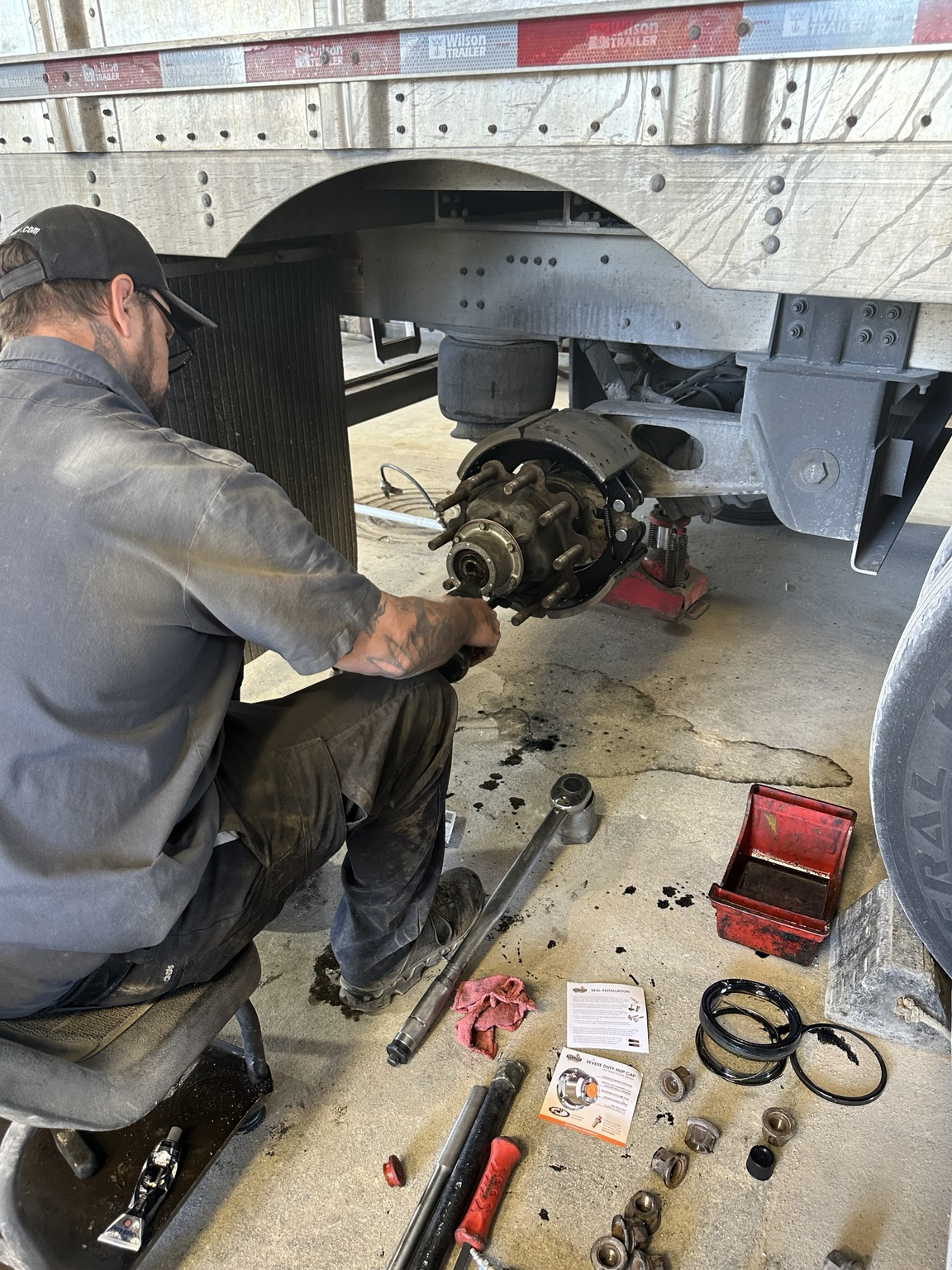
When you bring equipment to STS Truck Services for wheel-end service, our technicians can inspect wheel seals, hub oil level and condition, hub caps and plugs, bearings, bearing cups and races, hub condition, spindle wear and seal surface, brake shoes, brake drums, brake hardware, wheel studs, fasteners, installation condition, evidence of overheating, and evidence of previous incorrect repairs.
The goal is not just to replace a failed part. The goal is to understand why the failure happened, correct the problem, and help prevent repeat downtime.
Schedule Wheel-End Inspection or Repair With STS Truck Services
If your truck or trailer has a leaking wheel seal, low hub oil, oil-soaked brakes, abnormal wheel-end heat, damaged hub caps, or visible spindle wear, do not wait. Wheel-end failures can become expensive and dangerous fast.
Need heavy-duty truck or trailer wheel-end service near Blair, Nebraska? Contact STS Truck Services today.