STS Truck Services helps farms, grain operations, agricultural businesses, and commercial fleets prepare working trucks and trailers for harvest. Our pre-harvest inspection focuses on the systems most likely to create downtime, safety concerns, or expensive secondary damage when equipment is running hard.
Quick Takeaway for Farm and Fleet Managers
The best time to find a weak battery, coolant leak, worn brake, damaged tire, air leak, lighting problem, or loose connection is before harvest begins. A scheduled inspection creates time to order parts, prioritize repairs, and avoid preventable breakdowns during the busiest weeks of the year.
Why a Pre-Harvest Truck Inspection Matters
Harvest rarely allows a convenient repair window. Trucks may run longer hours, carry heavier loads, travel gravel roads, idle in dust, and move between fields, bins, elevators, and highways. A problem that feels minor during lighter use can become a breakdown when the equipment is under constant demand.
A pre-harvest inspection does not guarantee that nothing will fail. It does improve the odds that obvious wear, leaks, warning signs, and maintenance needs are corrected before the schedule becomes unforgiving.
What We Check Before Harvest
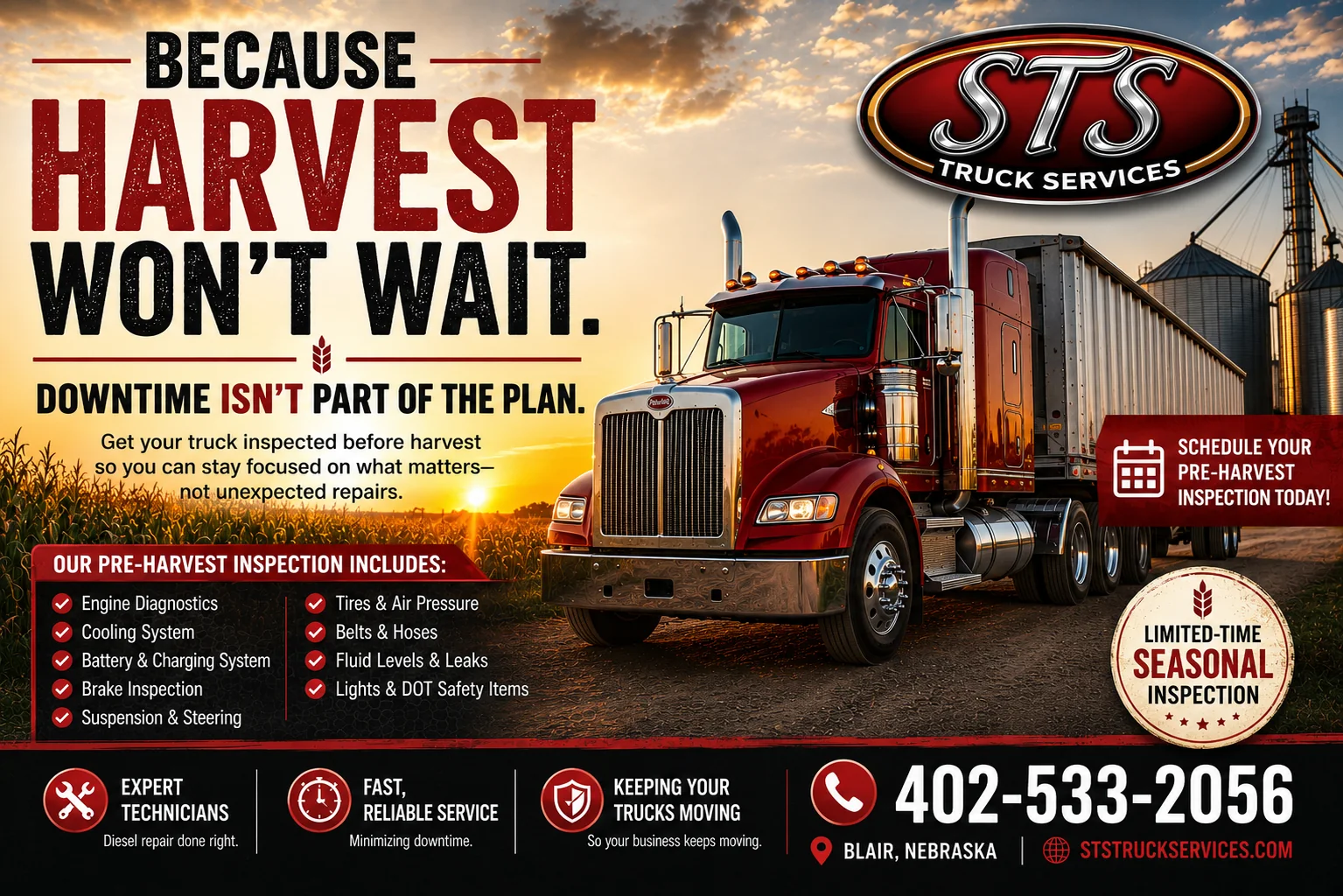
The exact inspection depends on the truck, trailer, mileage, application, and known concerns. A typical pre-harvest review may include:
Brake condition, air leaks, hoses, chambers, slack adjusters, warning operation, and related safety concerns.
Tread, inflation, visible damage, irregular wear, wheel seals, hubs, bearings, and signs of heat or movement.
Coolant level and condition, leaks, hoses, clamps, belts, radiator condition, fan operation, and overheating risks.
Oil, fuel, power steering, transmission, visible leaks, filters, service history, and overdue maintenance.
Battery condition, cables, terminals, grounds, starter performance, alternator output, and charging concerns.
Headlights, markers, brake lights, turn signals, trailer connections, wiring damage, and warning lamps.
Loose or worn components, bushings, shocks, springs, steering play, and handling concerns.
Visible damage, leaks, warning lights, active fault codes, DEF concerns, and unresolved derates.
Brakes, tires, ABS, lights, air lines, suspension, landing gear, doors, structure, and connection points.
Brakes, Tires, and Wheel Ends Carry the Load
Heavy loads and repeated stops expose weak brakes, marginal tires, and wheel-end problems quickly. Inspecting these systems before harvest helps identify wear before it becomes a roadside event, tire failure, damaged hub, or safety problem.
Do not overlook irregular tire wear.
Uneven wear can point to inflation problems, alignment, suspension wear, brake drag, or wheel-end concerns. The tire may be the symptom—not the whole problem.
Cooling Systems and Fluids Need Extra Attention
Dust, heat, long idle periods, and slow field approaches can make cooling-system weaknesses show up fast. Low coolant, restricted airflow, weak belts, damaged hoses, small leaks, or a fan problem can turn into overheating and expensive engine damage.
Fluid leaks should also be addressed before the season. A small leak that requires occasional topping off may become a major failure under long operating hours.
Batteries, Charging, Lights, and Fault Codes
Starting and charging problems create instant downtime. Batteries, cables, grounds, alternator output, and starter performance should be checked before trucks are needed every day. Lighting and trailer electrical connections also matter when trucks operate early, late, or on public roads.
Warning lights and active fault codes should be diagnosed instead of cleared and forgotten. A minor sensor or wiring issue can develop into a derate or no-start at the worst possible time.
Do Not Prepare the Truck and Forget the Trailer
A ready tractor does not help if the trailer has an air leak, worn brake, damaged tire, ABS warning, failed light, bad wheel seal, or structural concern. Pre-harvest planning should include every trailer expected to move grain, equipment, seed, fuel, or supplies.
Use Driver Reports as an Early-Warning System
Ask drivers what they have noticed: slow cranking, hard starts, warning lights, pulling, vibration, air-pressure loss, unusual noises, temperature changes, weak brakes, lighting problems, or a trailer that does not feel right. Small comments often provide the best starting point for inspection.
Turn the Inspection Into a Repair Plan
Not every finding has the same urgency. STS can help separate immediate safety or reliability concerns from maintenance that can be scheduled later. That gives the operation a practical plan for parts, repairs, and equipment availability before harvest starts.
For fleets, OEM-based preventive maintenance schedules and the STS Customer Portal can also help track service history, upcoming intervals, repair documentation, and unit-level maintenance needs.
Why Choose STS Truck Services?
STS Truck Services in Blair, Nebraska supports heavy-duty trucks and trailers with preventive maintenance, diagnostics, brakes, tires, cooling systems, electrical repair, DOT inspections, trailer repair, mobile service, and roadside assistance. We focus on clear communication, documented findings, practical recommendations, and keeping working equipment moving.
Service Area
We serve agricultural operations and commercial fleets throughout Blair, Omaha, Fremont, Tekamah, Herman, Arlington, Bennington, Missouri Valley, Council Bluffs, western Iowa, eastern Nebraska, and the surrounding farm communities.
Pre-Harvest Truck Inspection FAQs
How early should I schedule a pre-harvest inspection?
Schedule early enough to leave time for parts and repairs. Several weeks before the expected start of harvest is better than waiting until trucks are already needed.
Can STS inspect both trucks and trailers?
Yes. STS works on heavy-duty trucks and commercial trailers, so the inspection can include the complete combination instead of focusing on the tractor alone.
Is a pre-harvest inspection the same as a DOT inspection?
No. A DOT inspection is a formal compliance inspection. A pre-harvest inspection is an uptime-focused maintenance review. STS can also perform DOT inspections when needed.
Can you help prioritize the repairs?
Yes. Findings can be organized by safety, reliability, urgency, and recommended maintenance so you can make informed repair decisions.
Can you build a preventive maintenance schedule for our fleet?
Yes. STS can set up VIN-based OEM maintenance schedules and help track upcoming services through the Customer Portal.
How do I schedule?
Call STS Truck Services at 402-533-2056 or use the online service request link.
Schedule Before the Rush
Harvest will not wait for a truck repair. Let STS inspect your trucks and trailers while there is still time to plan.