Seven High-Impact Services That Keep Your Equipment Running Strong
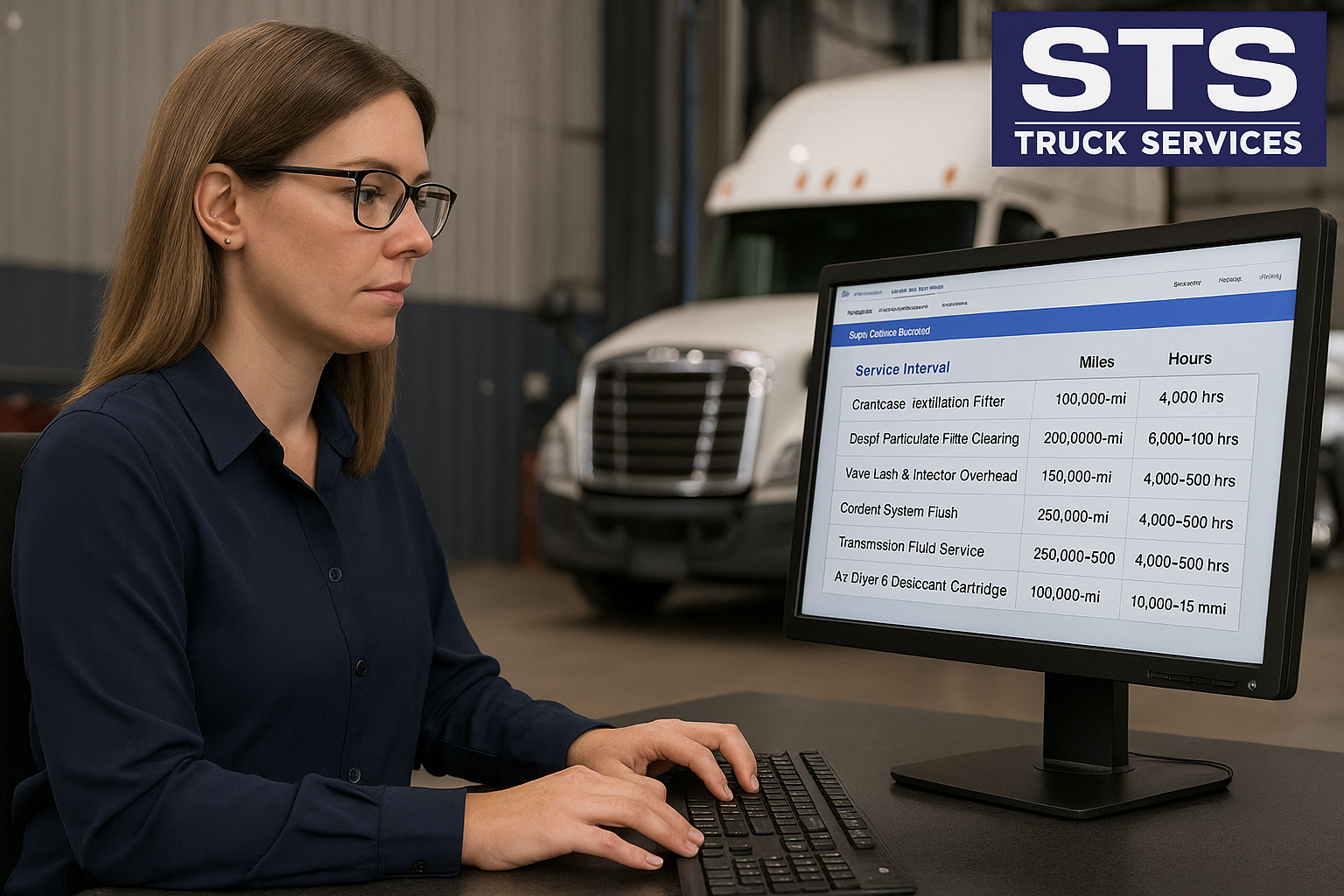
Some of the most important preventative maintenance services for heavy-duty trucks aren’t frequent—and that’s exactly why they get skipped. At STS Truck Services, we help our clients stay ahead of these long-interval items, so they don’t turn into costly breakdowns, unplanned downtime, or compliance issues down the road. Let us set up your specific truck and engine Preventative Maintenance based on the duty cycle & manufacturers recommended schedule, so you never miss one of these services. Below are some common intervals that serve only as examples, subject to change based on year, make, model, and duty cycle.
Here are seven commonly overlooked services that can make or break your uptime:
🔧 1. Crankcase Ventilation Filter Replacement
Why it matters: This filter removes oil mist and combustion gases from the engine crankcase. Over time, it becomes clogged, raising crankcase pressure and forcing oil past seals.
When skipped: Leads to excessive oil consumption, leaks, emissions issues, and even turbo or engine damage.
Typical Intervals:
- Cummins: 150,000–200,000 mi / 4,500–6,000 hrs
- Detroit (DD engines): 100,000–150,000 mi
- Volvo/Mack: 125,000–150,000 mi
- International (A26): 150,000 mi
- Paccar MX-13: 150,000 mi
- Cat (C13, C15): 150,000–200,000 mi
🔧 2. DPF Cleaning & Regeneration Monitoring
Why it matters: The Diesel Particulate Filter traps soot from exhaust gases. Passive regeneration isn’t always enough—ash accumulates and reduces performance.
When skipped: Expect reduced fuel efficiency, increased regeneration cycles, engine derates, and costly aftertreatment repairs.
Typical Intervals:
- Cummins: 200,000–400,000 mi / 6,000–10,000 hrs
- Detroit: 250,000–300,000 mi
- Volvo/Mack: 200,000–250,000 mi
- International: 250,000 mi
- Paccar: 200,000–300,000 mi
- Cat: 200,000–300,000 mi (when retrofitted with aftertreatment systems)
🔧 3. Valve Lash & Injector Overhead Adjustment
Why it matters: This precision service ensures the proper gap between the valve train and injectors. It’s vital to maintaining efficient combustion and fuel injection.
When skipped: Can cause poor fuel economy, engine misfire, injector wear, increased emissions, and long-term engine damage.
Typical Intervals:
- Cummins: Initial at 150,000 mi, then every 300,000 mi
- Detroit: Initial at 100,000 mi, then every 250,000 mi
- Volvo/Mack: 150,000 mi, or as part of in-frame service
- International: 150,000–200,000 mi
- Paccar: 150,000–250,000 mi
- Cat: Every 100,000–150,000 mi
🔧 4. Coolant System Flush & Service
Why it matters: Coolant loses effectiveness over time and contaminants build up. Proper intervals prevent overheating and internal corrosion.
When skipped: Can lead to radiator, water pump, and EGR cooler failures—major repairs with significant downtime.
Typical Intervals:
- Cummins: 300,000 mi or 2 years
- Detroit: 300,000 mi or 2 years
- Volvo/Mack: 250,000–300,000 mi
- International: 300,000 mi
- Paccar: 250,000–300,000 mi or 4,000–5,000 hrs
- Cat: 250,000–300,000 mi or as coolant analysis indicates
🔧 5. Transmission Fluid Replacement
Why it matters: Transmission fluid degrades under heat and load. Newer automated manual transmissions are especially sensitive to neglect.
When skipped: Causes gear slipping, shifting issues, and premature transmission wear—often leading to multi-thousand-dollar repairs.
- All OEMs with automated manuals: 400,000–500,000 mi or 3–5 years
- Manual transmissions: 250,000–400,000 mi depending on duty cycle and fluid type
(OEMs defer to transmission supplier specs—e.g., Eaton, Allison, Meritor)
🔧 6. Air Dryer & Desiccant Cartridge Replacement
Why it matters: Your air system needs to stay moisture-free for brakes to operate safely. The dryer removes condensation and prevents freeze-up or rust.
When skipped: Moisture enters the air system, causing frozen brakes, corroded valves, and unsafe stops—especially critical in hot or humid weather transitions.
Typical Intervals:
- All OEMs: 100,000–150,000 mi or 12 months depending on climate
(Recommended annually in humid or seasonal weather)
🔧 7. DEF Filter Replacement
What it does: Keeps the Diesel Exhaust Fluid system clean by removing contaminants before fluid reaches the injector or SCR catalyst.
Why it matters: A clogged DEF filter can cause reduced dosing accuracy, system errors, injector damage, and SCR efficiency loss.
Recommended intervals:
- Cummins: 200,000–300,000 mi or every 4,500–6,000 hrs
- Detroit: 200,000–300,000 mi
- Volvo/Mack: 200,000–250,000 mi
- International: 200,000–300,000 mi
- Paccar: 200,000–300,000 mi
- Cat: As equipped, often 200,000–250,000 mi (retrofit systems)
Proactive Service = Peak Performance
At STS Truck Services, we specialize in keeping your equipment safe, reliable, and efficient through proper maintenance scheduling. We use our repair software to help track and manage these services automatically, giving you visibility and control over your fleet’s long-term health.
📍 STS Truck Services
270 East Grant Street, Blair, NE 68008
📞 402-533-2056 | 🖥️ stscompanies.com
✅ Schedule service
✅ View repair history
✅ Approve estimates in real time through our online customer portal
Let’s get your fleet ready for summer—and beyond.