Your truck's fifth wheel is one of the most important safety components on the entire vehicle. It connects the tractor to the trailer and must withstand thousands of miles of pulling, turning, braking, accelerating, and hauling heavy loads.
Yet fifth wheels and coupling devices are also among the components that can be overlooked during routine truck maintenance.
A driver may notice an occasional clunk, feel a little extra movement when starting or stopping, or have trouble coupling and uncoupling a trailer. Those complaints are sometimes dismissed as normal wear.
But they may be warning signs of a much bigger problem.
At STS Truck Services in Blair, Nebraska, our technicians regularly inspect heavy-duty truck fifth wheels, mounting assemblies, bushings, pins, locking mechanisms, and related coupling components.
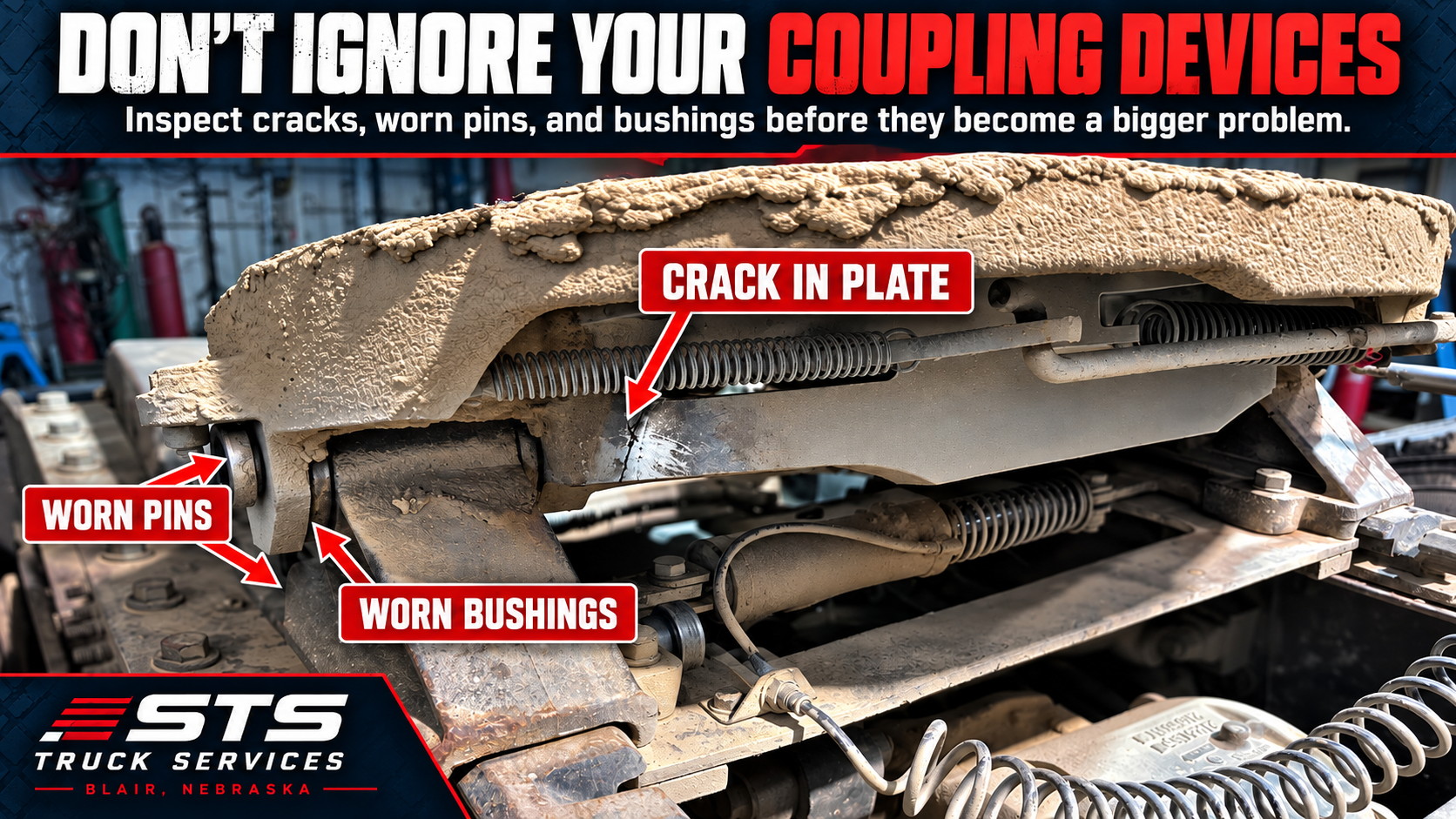
Recently, our team discovered a cracked fifth-wheel component and severely worn bushings on a customer's truck. The condition required replacement of the fifth-wheel plate assembly.
The damage was a reminder of why inspecting these critical components matters.
A worn or damaged fifth wheel is not something to ignore. The connection between your tractor and trailer is too important.
What Is a Fifth Wheel Coupling Device?
A fifth wheel is the heavy-duty coupling mechanism mounted on the rear of a semi-truck tractor.
The fifth wheel connects to the trailer's kingpin, allowing the tractor to pull the trailer while providing the movement needed for turning and normal operation.
A properly operating fifth-wheel assembly must accomplish several important tasks:
- 🔒 Securely lock the trailer kingpin into the coupling mechanism
- 🔧 Support and transfer trailer weight through the tractor
- ↪️ Allow controlled movement between the tractor and trailer
- 🛡️ Maintain a secure connection during acceleration, braking, and turning
- 🚛 Withstand vibration, twisting forces, and repeated heavy loads
The assembly includes more than the familiar large steel plate.
Depending on the design, it may also include mounting brackets, pivot pins, bushings, locking jaws, release handles, adjustment mechanisms, sliding rails, stops, and other components.
Every one of these parts contributes to reliable coupling operation.
When components wear out, become loose, crack, or lose proper lubrication, the entire assembly can be affected.
A Real Repair at STS Truck Services: Cracked Fifth Wheel and Worn Bushings
Our technicians recently inspected a truck with significant fifth-wheel wear.
The inspection revealed several concerns:
- A cracked structural component in the fifth-wheel assembly
- Worn mounting and pivot bushings
- Wear in the pin and pivot areas
- Deterioration requiring replacement of the fifth-wheel assembly
These problems are especially concerning because fifth-wheel components work together.
Bushings help control movement and support the assembly at its pivot points. When those bushings deteriorate, movement can increase beyond the manufacturer's allowable limits.
Over time, excessive movement can contribute to pounding, vibration, component wear, and additional stress on surrounding parts.
A crack in a load-bearing fifth-wheel component is particularly serious.
Cracks can develop further under repeated loading and movement, creating the possibility of significant structural failure.
Our technicians identified the damaged assembly and installed a replacement JOST fifth wheel.
The customer received a repair intended to restore proper coupling function rather than continuing to operate with damaged components.
This is why professional inspections are important. A small complaint or overlooked maintenance item can reveal a major safety concern.
Common Fifth Wheel Problems We Find During Truck Inspections
Fifth wheels operate in a demanding environment.
They are exposed to weather, dirt, road salt, vibration, repeated coupling cycles, and heavy loads.
Over time, several types of problems can develop.
1. Cracked Fifth Wheel Plates or Structural Components
Cracks may develop in mounting brackets, support structures, or other load-bearing components.
These cracks can result from fatigue, excessive loading, improper installation, damaged mounting components, or other stresses.
A crack may start small and become progressively worse.
Inspectors should look for:
- Visible cracks in structural components
- Cracks around welded areas
- Cracked or damaged mounting brackets
- Distorted components
- Unusual movement
- Evidence of repeated metal-to-metal impact
A suspected structural crack should be evaluated immediately. A cracked load-bearing coupling component may make the vehicle unsafe to operate.
2. Worn Fifth Wheel Bushings
Bushings allow controlled movement between certain fifth-wheel components.
When they become worn, the assembly may develop excessive movement or looseness.
Common symptoms include:
- Clunking during acceleration
- Banging when braking
- Excessive rocking or movement
- Increased vibration
- Uneven component wear
- Noise over rough roads
Worn bushings can also contribute to accelerated wear of pins, brackets, and adjacent components.
Replacing bushings before they fail completely may help avoid a much more expensive repair.
3. Worn Pins and Pivot Components
Pivot pins and related hardware experience constant movement and loading.
Over time, they may develop wear, corrosion, or excessive clearance.
Our technicians inspect pin and mounting areas for:
- Excessive play
- Worn contact surfaces
- Damaged or missing retainers
- Movement beyond manufacturer specifications
- Corrosion or deterioration
- Damaged mounting components
A pin or bushing problem should not be ignored simply because the fifth wheel still couples to a trailer.
4. Improper Fifth Wheel Adjustment
Some fifth-wheel designs include adjustable locking mechanisms that compensate for specified wear.
When adjustment is incorrect, drivers may experience excessive movement between the trailer kingpin and fifth-wheel locking mechanism.
Common problems include:
- Excessive fore-and-aft movement
- Clunking during starts and stops
- Poor locking engagement
- Difficulty releasing the trailer
- Premature wear of coupling components
Adjustment must follow the specific fifth-wheel manufacturer's procedures.
Not every loose fifth wheel can be repaired through adjustment. Worn components may need replacement.
5. Lack of Proper Lubrication
Fifth wheels require lubrication according to their design and manufacturer recommendations.
Insufficient lubrication can increase friction, accelerate wear, and affect how the tractor and trailer articulate.
Warning signs include:
- Dry or poorly lubricated contact surfaces
- Excessive friction during turning
- Squeaking or grinding noises
- Scoring or abnormal wear
- Difficult or inconsistent coupling operation
Some fifth wheels use special low-maintenance or no-lube components, so lubrication requirements vary.
Applying the wrong lubricant or lubricating components that should remain dry can create additional problems.
The correct maintenance procedure depends on the fifth-wheel model.
6. Damaged Locking Jaws or Kingpin Engagement
The locking mechanism is one of the most critical parts of the coupling system.
Damaged, worn, or improperly functioning locking components can create an unsafe tractor-trailer connection.
Potential problems include:
- Worn locking jaws
- Damaged release mechanisms
- Improper kingpin engagement
- Worn or damaged kingpins
- Faulty locking indicators
- Excessive clearance
- Incomplete coupling
A driver must verify proper coupling every time a trailer is connected, following the equipment manufacturer's instructions and the carrier's procedures.
Never assume the trailer is correctly coupled simply because the tractor backed underneath it.
7. Loose Mounting Hardware and Slider Problems
Fifth-wheel assemblies are mounted to the truck chassis through brackets, mounting hardware, and sometimes a sliding mechanism.
Problems may include:
- Loose mounting bolts
- Damaged brackets
- Cracked mounting components
- Worn slider rails
- Damaged slider locks
- Improper slider engagement
- Corrosion or missing hardware
A loose fifth-wheel mounting system can create additional movement and stress.
These concerns should be identified during regular maintenance inspections.
What Drivers Notice When Fifth Wheel Components Are Worn
Drivers are often the first people to notice that something is not right.
A fifth-wheel problem may create symptoms long before a component fails completely.
At STS Truck Services, we encourage fleet owners and managers to take driver complaints seriously.
"The trailer bangs when I hit the brakes."
A loud bang or clunk during braking may indicate excessive movement in the coupling assembly, mounting components, locking mechanism, or another drivetrain or chassis component.
The cause should be inspected rather than assumed.
"It jerks every time I take off."
A noticeable jerk when accelerating can indicate excessive movement between the tractor and trailer or other driveline concerns.
Worn bushings, locking components, pins, or mounting hardware may contribute.
"The fifth wheel is difficult to release."
Difficulty uncoupling can result from binding, improper load positioning, poor lubrication, worn parts, misadjustment, or locking mechanism problems.
Forcing the release mechanism is not a good solution.
"The truck makes noise when I turn."
Dry coupling surfaces or worn pivot components can create squeaking, grinding, or other unusual sounds during turns.
These noises deserve attention, particularly when they are new or worsening.
"It feels like the trailer is moving around."
Drivers may describe a loose or unstable feeling.
Although several vehicle systems can cause similar symptoms, excessive movement in the fifth-wheel assembly should be considered during diagnosis.
Driver complaints are valuable diagnostic information. They should be documented and investigated.
Fifth Wheel Problems Can Become DOT Violations
Fifth-wheel and coupling system problems are also a DOT compliance concern.
Federal Motor Carrier Safety Regulations require commercial vehicle coupling devices to meet applicable requirements.
Under 49 CFR §393.70, fifth-wheel assemblies and their mounting systems must meet specific requirements for secure attachment and proper operation.
Damaged or improperly secured coupling components can result in violations.
Serious defects may also meet applicable out-of-service criteria, depending on their nature and severity.
Inspectors may identify concerns such as:
- Cracked or broken coupling components
- Missing or loose mounting hardware
- Damaged locking mechanisms
- Improper engagement
- Excessive wear
- Damaged supporting components
- Unsafe or insecure coupling assemblies
For fleet operators, a coupling device problem can mean more than a repair bill.
It can mean:
⚠️ A roadside inspection violation
⚠️ An out-of-service order for a qualifying serious defect
⚠️ Driver downtime
⚠️ Delayed deliveries
⚠️ Additional towing or repair expenses
⚠️ Increased safety risk
A properly maintained coupling system helps protect drivers, cargo, equipment, and the public.
The Cost of Ignoring Worn Fifth Wheel Components
A loose or noisy fifth wheel may seem like a small maintenance issue.
But delaying repairs can allow damage to spread.
Consider this hypothetical example.
A truck develops excessive movement in the fifth-wheel mounting bushings.
The driver reports clunking when accelerating and braking, but the truck continues operating.
As the bushings deteriorate, the movement increases. The mounting pins and related components experience additional stress.
Eventually, the damage becomes severe enough to require more extensive repairs.
What might have started as a manageable bushing and pin repair may now require replacement of larger components, additional labor, and unexpected downtime.
The customer may also face lost revenue from having the truck out of service.
This is exactly the kind of problem that preventive inspections are intended to identify.
Finding wear early gives customers an opportunity to schedule repairs rather than waiting for the equipment to fail.
Why Professional Fifth Wheel Inspections Matter
A fifth-wheel inspection involves more than looking at the top plate.
The condition of the entire assembly matters.
At STS Truck Services, our technicians understand the importance of examining coupling systems for wear, damage, movement, and proper function.
Depending on the equipment, a professional inspection may include:
✅ Fifth-wheel plate condition
✅ Mounting brackets and structural components
✅ Pivot pins and bushings
✅ Locking jaw operation
✅ Release mechanism condition
✅ Proper adjustment
✅ Kingpin condition and engagement
✅ Mounting hardware
✅ Slider components
✅ Lubrication requirements
✅ Visible cracks or deformation
✅ Excessive movement or abnormal wear
The inspection should follow the applicable manufacturer's maintenance and wear specifications.
Some components can be serviced or adjusted. Others may need replacement.
Proper diagnosis helps determine the correct repair.
STS Truck Services: Trained Technicians, Clear Communication, and Proper Tools
At STS Truck Services, we believe a quality repair depends on three important things.
1. Trained Professional Technicians
Our technicians inspect equipment carefully and identify issues that may be missed during basic maintenance.
They understand that worn bushings, damaged mounting components, and improper adjustments can contribute to larger problems.
2. A Professional Service Advisor Process
Finding a problem is only part of the job.
Customers need to understand what was found, why it matters, and what repair is recommended.
Our service advisor process emphasizes communication, documentation, and practical recommendations.
We want customers to understand the condition of their equipment before making repair decisions.
3. Professional Tools and Repair Equipment
Heavy-duty truck repairs require the correct tools and procedures.
Our shop invests in equipment and technical capability to support professional inspections and repairs.
This approach helps us identify the problem, recommend the appropriate repair, and verify the work performed.
Trained technicians. Clear communication. Proper tools.
That is how we help customers protect uptime and make informed maintenance decisions.
Should Fifth Wheel Inspections Be Part of Your PM Program?
Absolutely.
A fifth wheel should not be ignored until the driver complains about noise or the coupling becomes difficult to operate.
Coupling devices should be included in regular preventive maintenance inspections, with the inspection scope and interval based on the manufacturer, vehicle use, mileage, and operating conditions.
This is especially important for trucks that:
- Couple and uncouple frequently
- Pull heavy loads
- Operate on rough roads
- Experience significant stop-and-go driving
- Work in agricultural or construction environments
- Operate in winter road salt or harsh conditions
- Have high mileage
- Have unknown coupling maintenance history
During scheduled maintenance, technicians can inspect fifth-wheel wear, lubrication, mounting hardware, bushings, pins, locking mechanisms, and related components.
This helps fleets identify problems before they become unexpected breakdowns.
At STS Truck Services, we also help customers document findings and prioritize repairs.
Fifth Wheel Repair and Replacement in Blair, Nebraska
STS Truck Services provides heavy-duty truck inspection and repair services from our shop in Blair, Nebraska.
We can help customers with:
🔧 Fifth-wheel inspections
🔧 Fifth-wheel replacement
🔧 Coupling device diagnostics
🔧 Worn bushing and pin concerns
🔧 Fifth-wheel mounting inspections
🔧 Adjustment and lubrication, where applicable
🔧 Locking mechanism concerns
🔧 Slider and mounting hardware inspections
🔧 DOT inspection-related repairs
🔧 Preventive maintenance programs
Whether you operate a single truck or a fleet, coupling system maintenance is an important part of keeping equipment safe and reliable.
Serving Blair, Omaha, Fremont, and Western Iowa
STS Truck Services helps commercial vehicle owners and fleets operating throughout the surrounding region, including:
- 📍 Blair, Nebraska
- 📍 Omaha, Nebraska
- 📍 Fremont, Nebraska
- 📍 Council Bluffs, Iowa
- 📍 Missouri Valley, Iowa
- 📍 Washington County
- 📍 Eastern Nebraska
- 📍 Western Iowa
- 📍 I-29 and I-80 corridors
Our Blair location is convenient for local operators and customers traveling through the region.
Don't Wait for a Fifth Wheel Failure — Schedule an Inspection
Your fifth wheel is one of the most important connections on your truck.
If your drivers are reporting clunking, banging, excessive movement, difficult coupling, unusual noises, or concerns about the locking mechanism, get the equipment inspected.
And even if there are no obvious complaints, regular preventive maintenance inspections can help identify wear before it becomes serious.
At STS Truck Services, our technicians can inspect your coupling system, identify worn or damaged components, and recommend appropriate repairs.
Don't wait for a worn bushing, damaged pin, or cracked fifth-wheel component to create a dangerous situation.
Let STS Truck Services help you identify the problem before it becomes downtime.
Frequently Asked Questions About Fifth Wheel Repair
How do I know if my semi-truck fifth wheel is worn out?
Common warning signs include clunking, excessive movement, difficulty coupling or uncoupling, unusual noises, and visible wear or damage. A professional inspection can determine whether components need adjustment, lubrication, repair, or replacement.
Can worn fifth wheel bushings cause clunking?
Yes. Worn mounting or pivot bushings can allow excessive movement and may contribute to clunking during acceleration and braking. Other components can cause similar symptoms, so diagnosis is important.
Can a cracked fifth wheel cause a DOT violation?
Yes. Cracked or damaged coupling components can violate applicable federal equipment requirements. Serious defects may also result in an out-of-service order.
How often should a fifth wheel be inspected?
Drivers should examine coupling security as part of their pre-trip procedures. Detailed inspections, lubrication, and adjustment should follow the applicable manufacturer's maintenance recommendations and the vehicle's operating conditions.
Can a fifth wheel be adjusted instead of replaced?
Some fifth wheels have adjustable locking mechanisms. However, adjustments cannot correct every condition. Cracked structural components or wear beyond allowable limits may require component or assembly replacement.
Where can I get fifth wheel repair near Omaha, Nebraska?
STS Truck Services in Blair, Nebraska, provides heavy-duty truck coupling system inspections and repair services for customers throughout the Omaha, Blair, Fremont, and western Iowa region.
Concerned About Your Fifth Wheel?
Clunking, unexpected movement, difficult coupling, or visible damage deserves a professional inspection. Contact STS Truck Services in Blair, Nebraska to discuss your truck and schedule service.