Specialized Equipment Matters
Local operations may rely on drill rigs, service trucks, grading equipment, dump trucks, agricultural units, and trailers. Repair support must be flexible enough to diagnose and service more than one type of vehicle.
STS Truck Services supports commercial trucks, service vehicles, agricultural operations, contractors, municipal equipment, school transportation, and vocational fleets throughout Tekamah, Herman, Decatur, and northern Burt County. From our Blair shop, we provide diagnostics, preventive maintenance, DOT inspections, tires, heavy-duty repair, mobile service, and roadside assistance focused on keeping your equipment moving.
STS Truck Services supports Tekamah, Herman & Decatur-area commercial trucks with diagnostics, electrical repair, fleet maintenance, DOT inspections, trailer repair, cooling system work, aftertreatment service, and repair planning from our Blair shop.
Jump to the information that matters most for trucks and fleets operating throughout Tekamah, Herman, and Decatur.
The Tekamah–Herman–Decatur corridor is home to agricultural operations, well-service companies, grading and construction contractors, public fleets, school transportation, and businesses running service trucks and specialized equipment. These operations need repair support that understands vocational equipment, seasonal demands, and the cost of losing a working unit.
STS focuses on the full repair process: symptoms, diagnostics, estimate clarity, technician findings, preventive maintenance, and the practical steps needed to return the truck to work.
STS supports heavy-duty trucks, trailers, fleets, and owner-operators with practical diesel service from Blair, Nebraska.
Computer diagnostics, wiring issues, no-starts, charging problems, intermittent faults, warning lights, and drivability concerns.
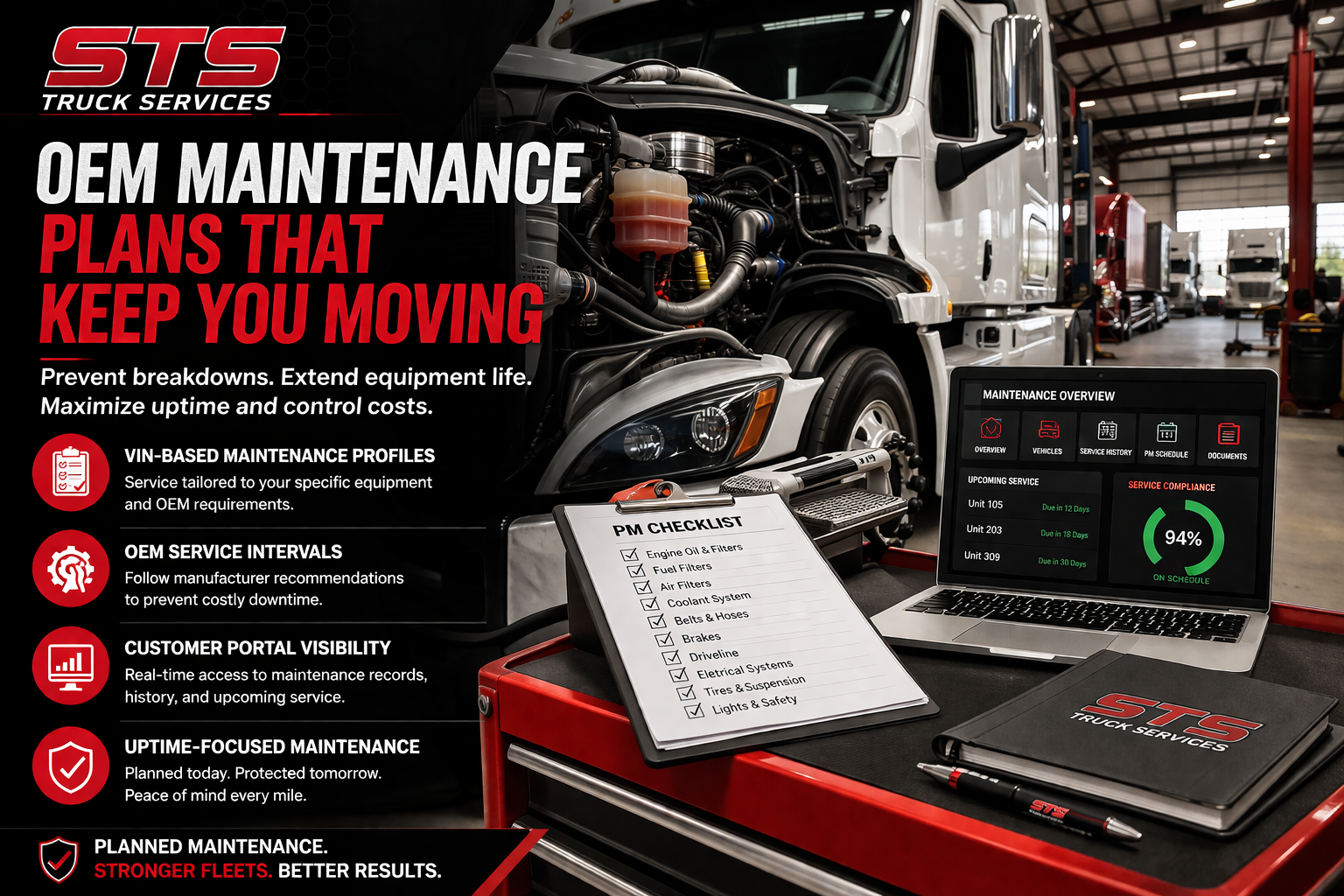
OEM-based PM planning, oil and fluid service, grease service, inspections, maintenance documentation, and fleet repair coordination.
DEF, SCR, DPF, EGR, regen, derate, sensor, and emissions-related performance concerns diagnosed before parts are thrown at the problem.
Trailer brakes, air leaks, lighting, suspension, doors, DOT-related items, welding support, and trailer inspection repairs.
Annual DOT inspections, pre-inspection repairs, safety checks, and documentation for commercial trucks and trailers.
Cooling systems, exhaust, suspension, brakes, driveline, clutch, transmission, engine repair, and other heavy-duty repair needs.
We support trucks and equipment operating along U.S. Highway 75, Nebraska Highway 32, Nebraska Highway 51, the Tekamah–Herman corridor, the Decatur river area, and rural routes throughout Burt County. Service availability depends on the repair, technician schedule, truck location, and safe access.
One disabled unit can delay deliveries, jobsite work, driver schedules, and customer commitments. That is why STS writes these pages around uptime, not just repair categories.
This territory includes a practical mix of diesel-powered work: service trucks, drill rigs, dump trucks, grading equipment, agricultural trucks, school buses, municipal vehicles, trailers, and support units. STS can serve as the primary repair partner or provide overflow help when an operation already has an in-house technician.
Fleets in Tekamah, Herman, and Decatur work across rural highways, gravel roads, farms, construction sites, municipal routes, school schedules, and river-area operations. That mix creates different maintenance priorities than a truck running only open interstate miles.
Routes and corridors we consider: U.S. Highway 75, Nebraska Highways 32 and 51, the Tekamah–Herman corridor, the Decatur river area, and rural Burt County roads connecting local jobsites, farms, schools, public works departments, and Blair.
A down unit can delay deliveries, jobsite work, route schedules, drivers, and customer commitments. STS builds these pages around uptime because fleets do not just need repairs; they need fewer surprises.
Drill rigs and well-service units depend on reliable PTO, hydraulic, cooling, electrical, brake, and chassis systems. Careful diagnostics and clear repair documentation help keep specialized equipment working safely.
Dust, vibration, heavy loads, idle time, and jobsite travel increase wear on brakes, suspension, tires, cooling systems, lighting, and aftertreatment components.
Road department, public works, utility, parks, and seasonal response vehicles need dependable inspections, documented repairs, and maintenance scheduling that protects essential local services.
School buses and activity vehicles need safety-first inspections, dependable HVAC, lighting, brakes, tires, and repair communication that protects routes, schedules, and passenger safety.
Utility, landscape, tree-service, and field-support trucks often idle hard, carry tools, pull trailers, and rely on brakes, lighting, cooling, electrical, hydraulic, and PTO systems.
Dump trucks and equipment trailers face heavy loads, rough access roads, brake and suspension wear, tire damage, lighting issues, air-system concerns, and DOT requirements.
Operations with their own technician may still need diagnostic support, DOT inspections, overflow capacity, major repairs, or help when several units require attention at the same time.
Farm trucks, seasonal units, equipment haulers, and support vehicles need maintenance timed around planting, harvest, hauling, and construction deadlines when preventable downtime is especially costly.
When maintenance is planned around how the truck actually works, fleets have a better chance of catching problems before they become missed jobs, delayed deliveries, roadside calls, failed inspections, or preventable downtime.
Our outreach through Tekamah, Herman, and Decatur confirmed that this area depends on a broad mix of diesel work vehicles and specialized equipment—not just highway tractors.
Local operations may rely on drill rigs, service trucks, grading equipment, dump trucks, agricultural units, and trailers. Repair support must be flexible enough to diagnose and service more than one type of vehicle.
Tire availability and service can become a serious downtime issue for rural fleets. STS can help identify tire needs while a truck is already being inspected, maintained, or repaired.
Companies with their own technician may still need diagnostic support, overflow capacity, DOT inspections, major repairs, or help when several units need attention at once.
VIN-based maintenance schedules help fleets plan service before planting, harvest, construction deadlines, school routes, or other high-demand periods.
STS evaluates the truck, equipment type, location, urgency, and safest repair path. Some work is best completed at our Blair shop; other situations may qualify for mobile service or roadside assistance.
Local duty cycle matters. These are the types of problems that can show up when commercial trucks are working in and around Tekamah, Herman & Decatur.
STS also supports trucks and fleets across the Omaha metro, eastern Nebraska, and western Iowa.
STS regularly visits businesses and public operations throughout this territory to better understand the trucks, equipment, and service challenges local organizations face.
Recent outreach included well-service operations, grading and construction businesses, municipal and county departments, agricultural fleets, and companies operating service trucks and specialized equipment.
These visits help our team identify practical needs such as tire support, diagnostic capability, preventive maintenance planning, DOT readiness, overflow help for in-house technicians, and repair options for vocational equipment.
Talk With STS About Your FleetYes. STS supports commercial trucks, trailers, owner-operators, and fleets operating in and around Tekamah, Herman & Decatur with diesel repair, diagnostics, DOT inspections, trailer repair, and fleet maintenance planning from Blair, Nebraska.
STS works with heavy-duty diesel trucks, commercial trucks, trailers, buses, fleet units, owner-operator trucks, and many work vehicles used by contractors, municipalities, agricultural support businesses, and service companies.
Yes. STS performs DOT inspections and can help repair DOT-related findings such as brakes, lights, suspension, tires, air leaks, trailer concerns, and other safety items.
Yes. STS supports fleet maintenance planning and customer portal visibility so customers can better organize service requests, repair activity, invoices, and unit maintenance history.
Call STS Truck Services in Blair or request service online for diagnostics, fleet maintenance, DOT inspections, trailer repair, and heavy-duty diesel support.
Reach out for commercial diesel repair, diagnostics, fleet maintenance, DOT inspections, trailer repair, customer portal support, and uptime-focused service planning for trucks operating across the Omaha metro and eastern Nebraska.
Phone: 402-533-2056
Email the Shop: stsrepair@sterlingtransportationservices.com
Address: 270 Grant Street, Blair, NE 68008
Blair, Nebraska
Omaha, Nebraska
Fremont, Nebraska
Council Bluffs, Iowa
Missouri Valley, Iowa
I-29 and I-80 corridors
Not ready to use the repair portal yet? Send a quick service note to the shop and we will follow up during business hours.
This opens your email app so you can review the message before sending.